
ⓘ Images in this post are AI-generated virtual design concepts intended for inspiration. Linked products reflect the style and feel of the space, but are not exact matches. This post contains affiliate links. As an Amazon Associate, I may earn on qualifying purchases.
Throw pillows should be one of the easiest parts of decorating a living room, but somehow they can turn into twenty minutes of moving the same three pillows around and wondering why none of it looks quite right.
The trick is usually less about finding the perfect pillow and more about getting the mix right. Size, pattern, color, and even the pillow insert make a surprisingly big difference.
I tend to keep the formula fairly simple: start with the right scale for the sofa, mix patterns without trying to make everything match, and stop adding pillows before there’s nowhere left to sit.
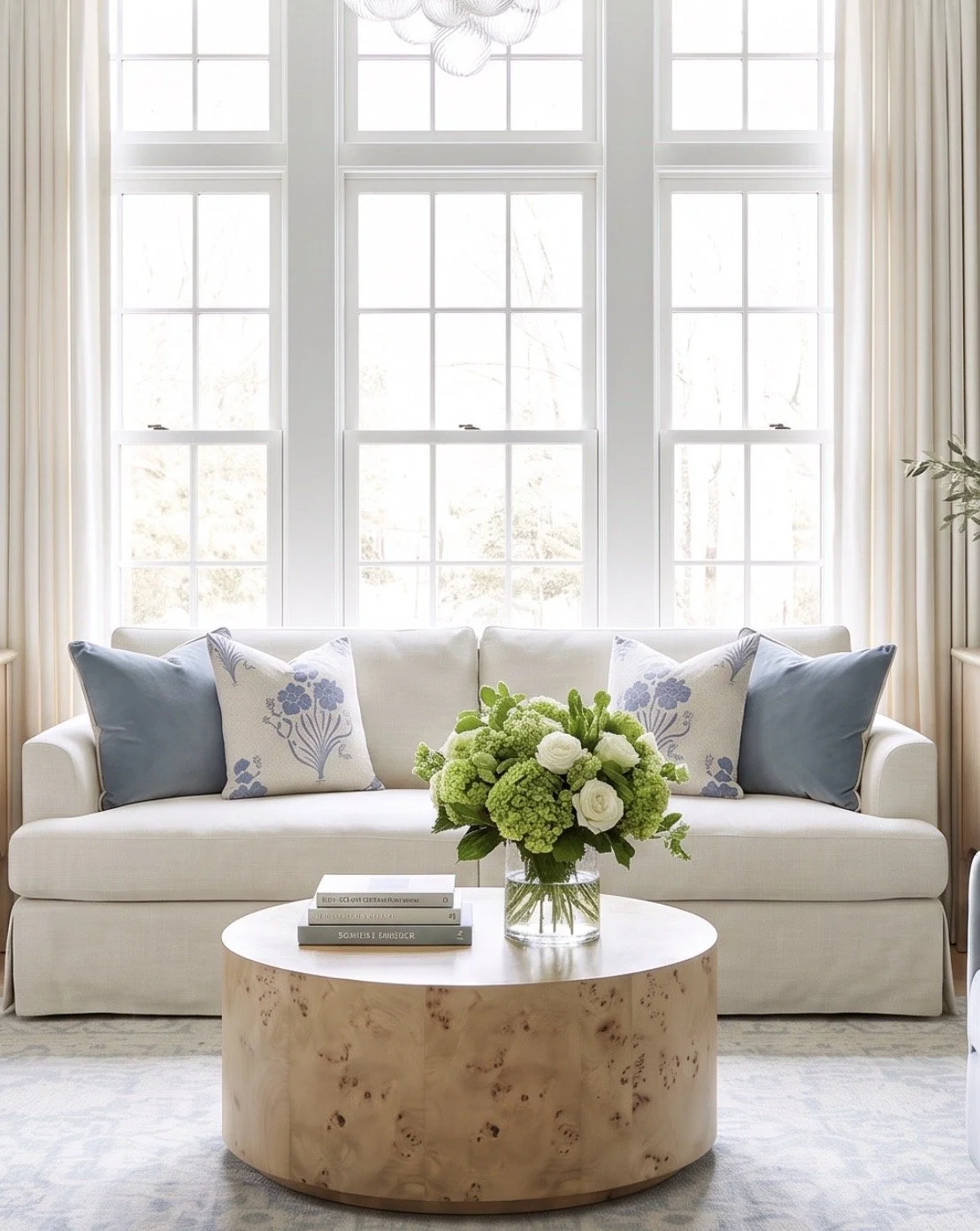
Start with bigger pillows than you think you need.
One of the most common things that makes a sofa look a little unfinished is using pillows that are too small.
For most standard sofas, I like starting with 20- or 22-inch square pillow covers. On a larger or deeper sofa, I’ll often use 22-inch pillows as the base and layer something smaller in front. A big sectional can usually handle even more scale.
The largest pillows should generally sit toward the outside corners or back of the arrangement. From there, you can layer in a slightly smaller square or lumbar pillow.
I don't think every sofa needs a complicated five-pillow formula, either.
Two beautiful pillows can be plenty on a smaller sofa. Three works nicely when you want something simple and slightly asymmetrical. A larger sofa or sectional can handle five or more, but I still want enough open seating that nobody has to relocate an entire pillow collection before sitting down.
And then there are the inserts.
This is probably the easiest little change you can make if your pillows always look slightly flat. I always recommend sizing your insert up about two inches from the pillow cover. So if you have a 20-inch pillow cover, use a 22-inch insert.
That extra two inches fills out the corners and gives the pillow a much fuller, more finished shape. It can make even a fairly inexpensive pillow cover look considerably better.
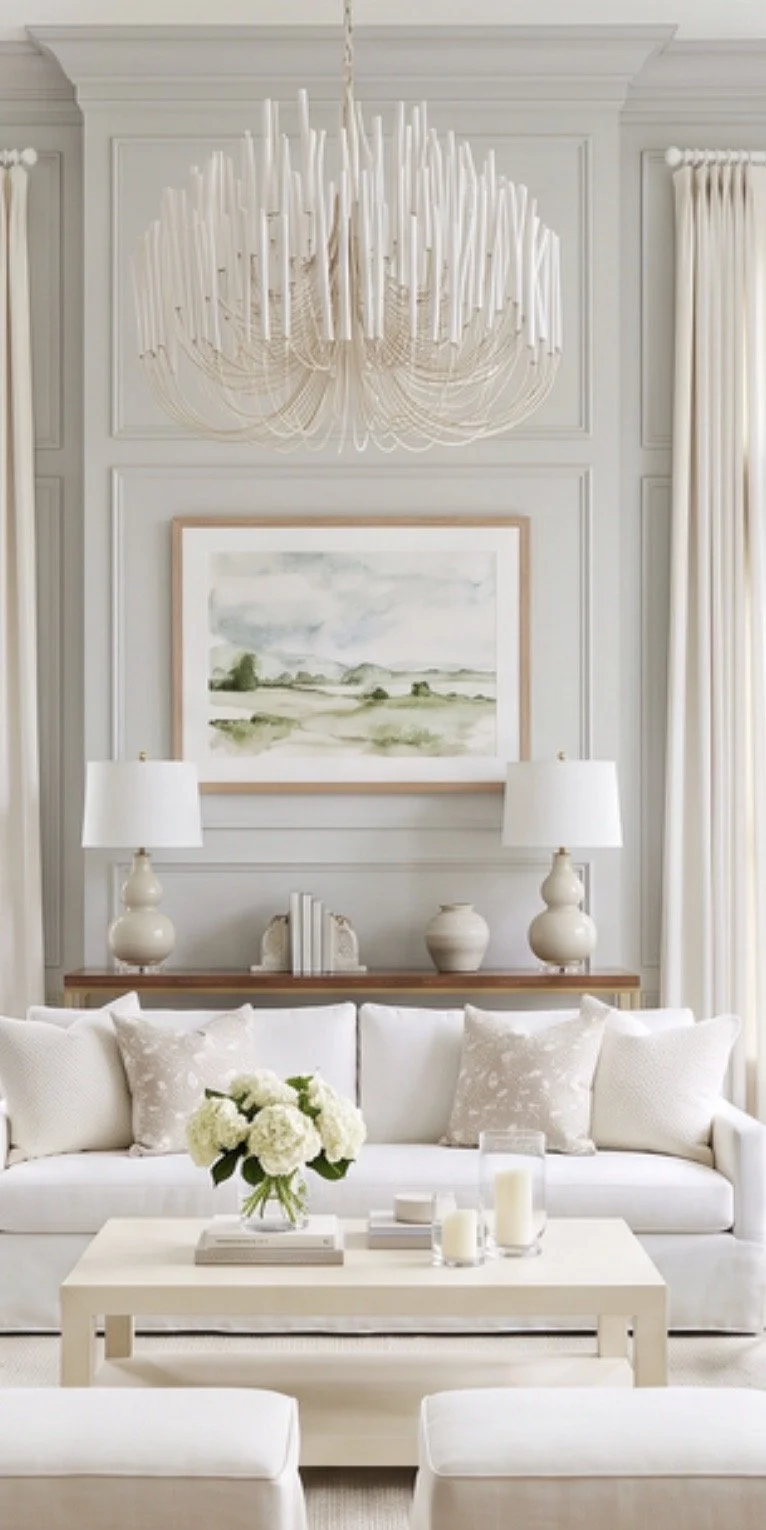
Mix patterns by changing the scale, not by making everything match.
I love pattern, but I don't want every pillow on the sofa shouting at the same volume.
If I'm using a larger floral or block print, I'll usually pair it with something quieter—a small-scale print, stripe, check, subtle geometric, or solid texture.
The patterns don't have to match. They just need something that connects them.
Usually that's color.
A blue floral, blue-and-cream stripe, and warm neutral textured pillow can all work together because the colors relate even though the patterns are completely different.
This is also why I like pulling pillow colors from things that are already in the room.
Look at the rug, artwork, drapery, upholstery, or even a favorite accessory. If there's a little dusty blue in the rug, you can bring that blue onto the sofa. If the room already has plenty of blue, maybe the pillows are where you introduce a little soft green, warm brown, or cream instead.
And don't feel like every pillow needs a pattern.
A solid velvet, linen, or other textured fabric can give your eye somewhere to rest between busier prints. Sometimes the quietest pillow is what makes the prettier patterned ones work.
This is also where I like choosing one pillow I really love first and building the rest of the combination around it. It's much easier to find a stripe, small print, or solid that works with a beautiful floral than to try to choose an entire pillow combination at once.
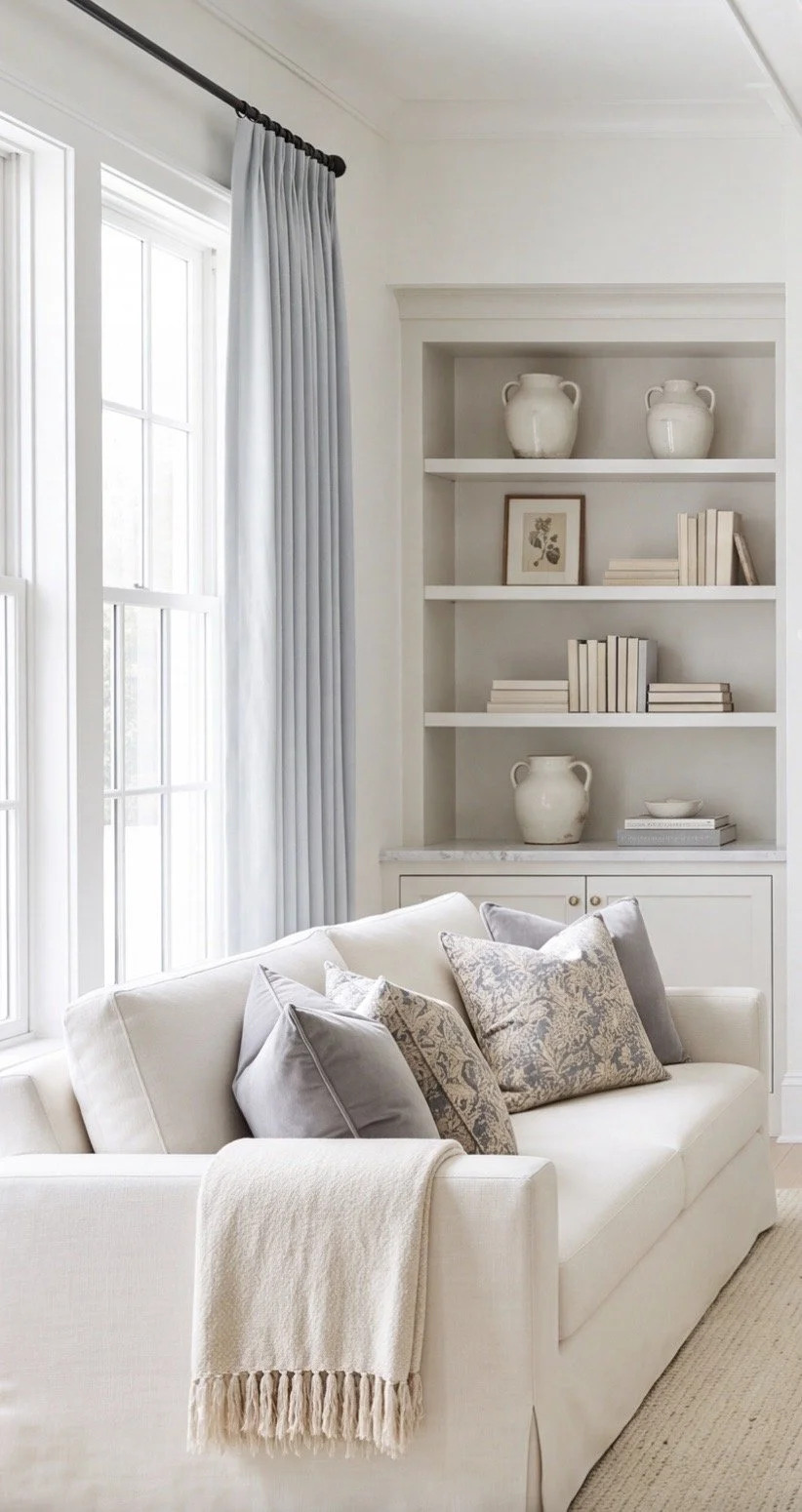
Let the sofa determine the arrangement.
There's no single pillow arrangement that works on every sofa.
On a standard sofa, I often like a larger square in each corner with one or two smaller pillows layered in. If I want something a little more relaxed, I'll make the two sides slightly different rather than creating perfect symmetry.
For a sectional, I think about the ends and inside corner as separate little groupings. Start with the larger pillows, layer smaller ones in front, and use a lumbar if the arrangement needs another shape.
The upholstery matters too.
If the sofa itself already has a strong color or pattern, I'd simplify the pillows rather than piling more competing pattern on top of it. A neutral sofa gives you much more freedom to let the pillows bring in color and personality.
And you really don't need a huge collection.
I'd rather have a few pillows with enough size and pattern to make an impact than a sofa covered in lots of small ones. Between choosing a larger scale, varying the patterns, and using inserts that are two inches bigger than the covers, a fairly simple combination can look beautifully layered.
I've linked some similar pillow finds I love below, along with pillow inserts for creating that fuller look.
The goal isn't a perfectly styled sofa that nobody is allowed to touch. It's a mix that gives the room some color and personality, feels collected rather than overly coordinated, and still leaves somewhere for everyone to actually sit.

You May Also Like…


Love classic home design?
Get one beautifully designed newsletter each month featuring:
New virtual room designs
Designer styling tips
Curated collections
Exclusive decorating inspiration