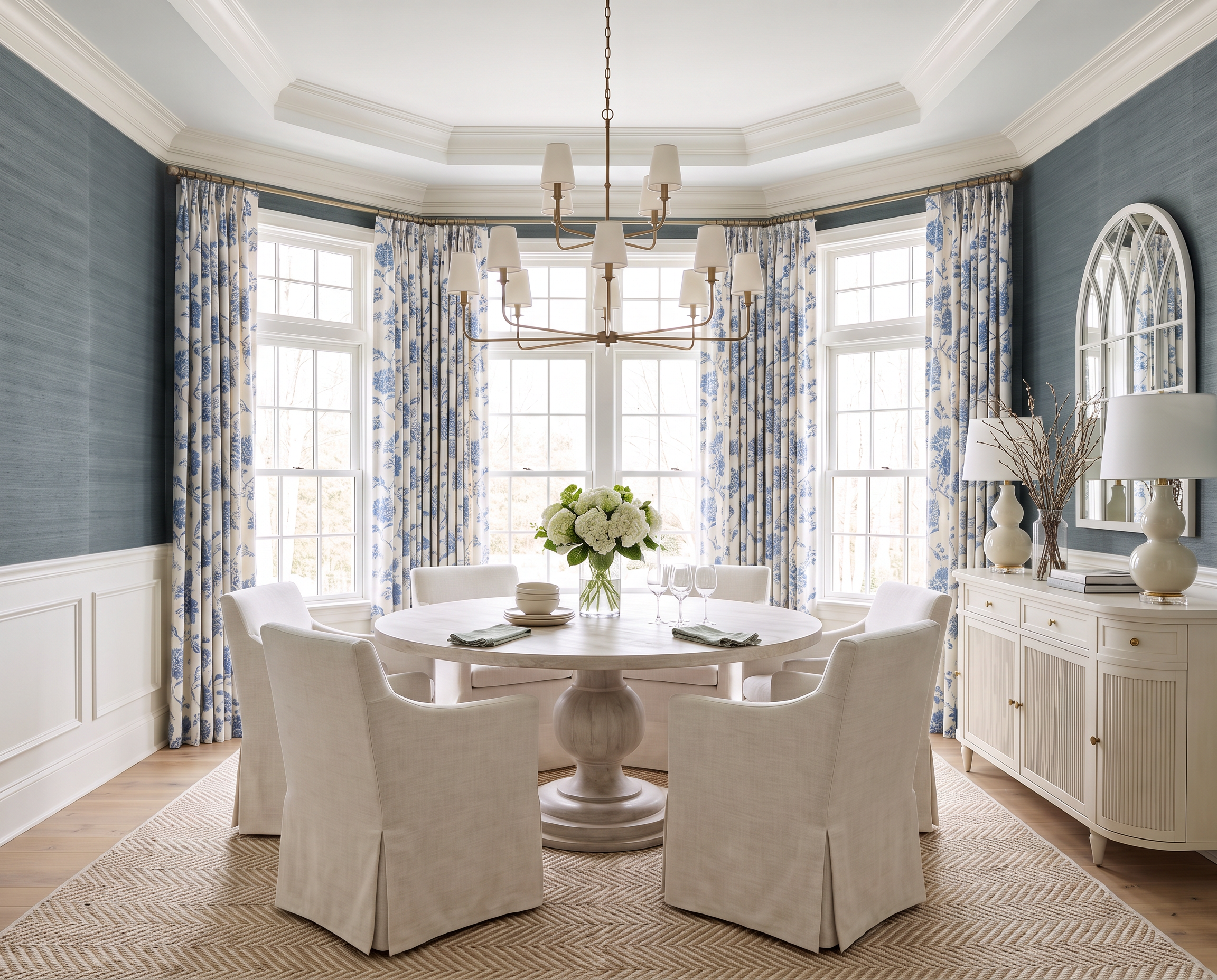
ⓘ Images in this post are AI-generated virtual design concepts intended for inspiration. Linked products reflect the style and feel of the space, but are not exact matches. This post contains affiliate links. As an Amazon Associate, I may earn on qualifying purchases.
A chandelier can completely change a dining room, but getting the size right matters almost as much as choosing one you love.
Too small, and even a beautiful fixture can look a little lost floating above the table. Too large, and suddenly the chandelier is taking over the entire room—and possibly making everyone duck when they stand up.
I usually start with the dining table rather than the chandelier itself. Once you know the table dimensions, shape, ceiling height, and general proportions of the room, narrowing down the right fixture gets much easier.
Start with the width of your dining table.
For a chandelier hanging directly over a dining table, the table is usually the most useful place to start.
A good guideline is to look for a chandelier that's roughly one-half to two-thirds the width of the table.
So if your dining table is 48 inches wide, I'd start looking at fixtures somewhere around 24 to 32 inches wide. For a 42-inch-wide table, somewhere around 21 to 28 inches gives you a useful starting range.
But I wouldn't treat those numbers as an absolute rule.
The visual weight of the chandelier matters too.
A very open chandelier with thin arms can often be larger without feeling overwhelming. A fixture with a solid shade, lots of detailing, or a dense silhouette may feel much bigger even if the actual dimensions are the same.
This is one of the reasons I always look at the listed dimensions before ordering lighting. Product photos can make a chandelier look enormous—or surprisingly small—and neither is particularly helpful when you're trying to picture it over your own table.
When I'm deciding between two sizes, I generally lean toward the larger one if the fixture has an airy design and the room can handle it. An undersized chandelier tends to bother me much more than one with a little extra presence.
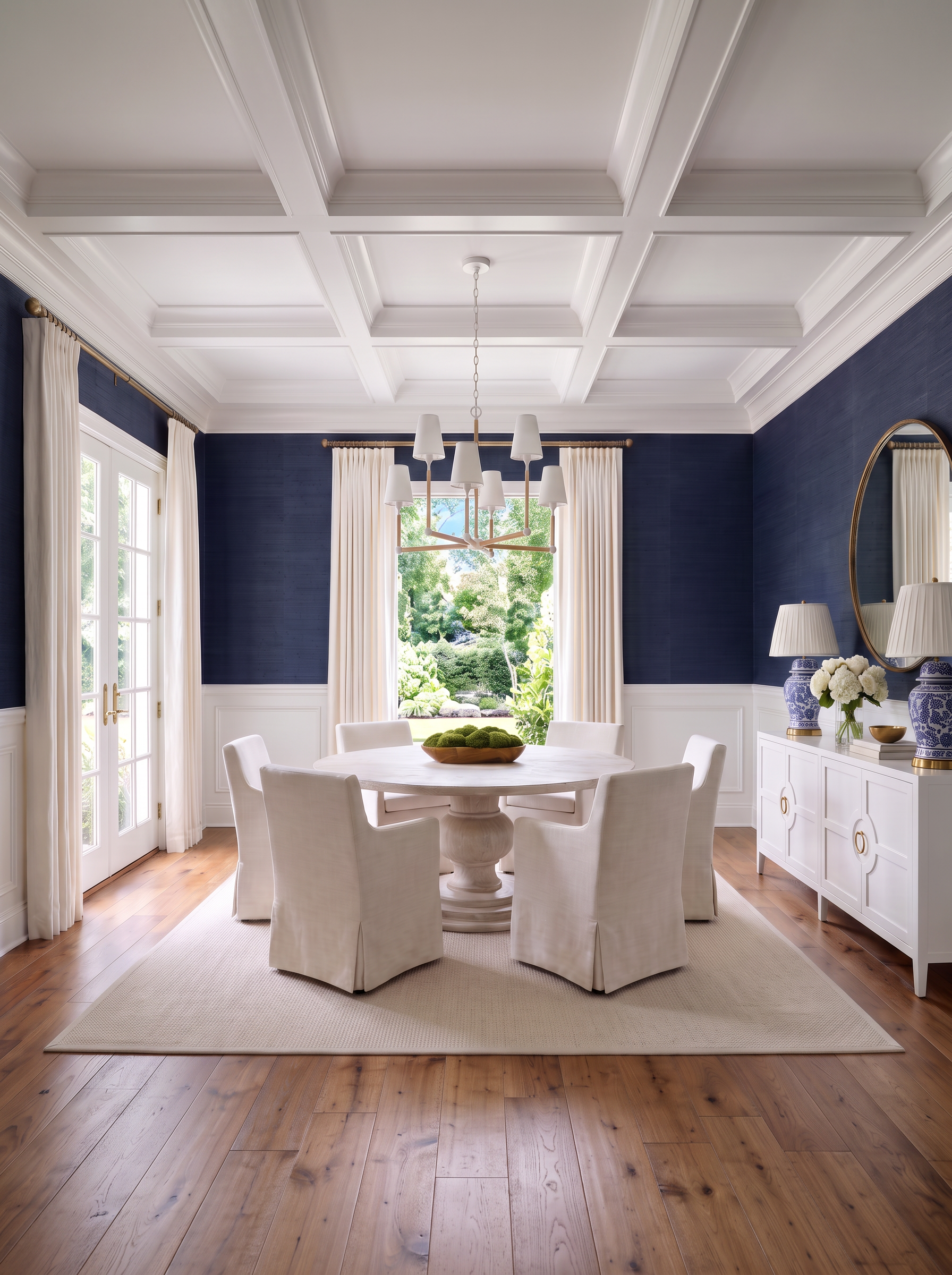
Round and rectangular tables need slightly different lighting.
The proportions work a little differently depending on whether you're lighting a round or rectangular dining table.
For a round table, I usually like a single chandelier centered over the table. A round, globe-shaped, or evenly balanced multi-arm chandelier tends to work especially well because the fixture relates naturally to the shape of the table.
For sizing, I still use the table width as my starting point. A chandelier around one-half to two-thirds the diameter of the table usually gives you a good range to work within.
So, for example, over a 48-inch round table, I'd start looking somewhere around 24 to 32 inches wide.
A rectangular table gives you a little more to think about because you're working with both width and length.
For a standard rectangular dining table, one substantial chandelier centered over the table can work beautifully. I still pay attention to the width of the table so the fixture doesn't overwhelm it, but I also look at how the chandelier relates to the table's length.
The longer the table gets, the more important that becomes.
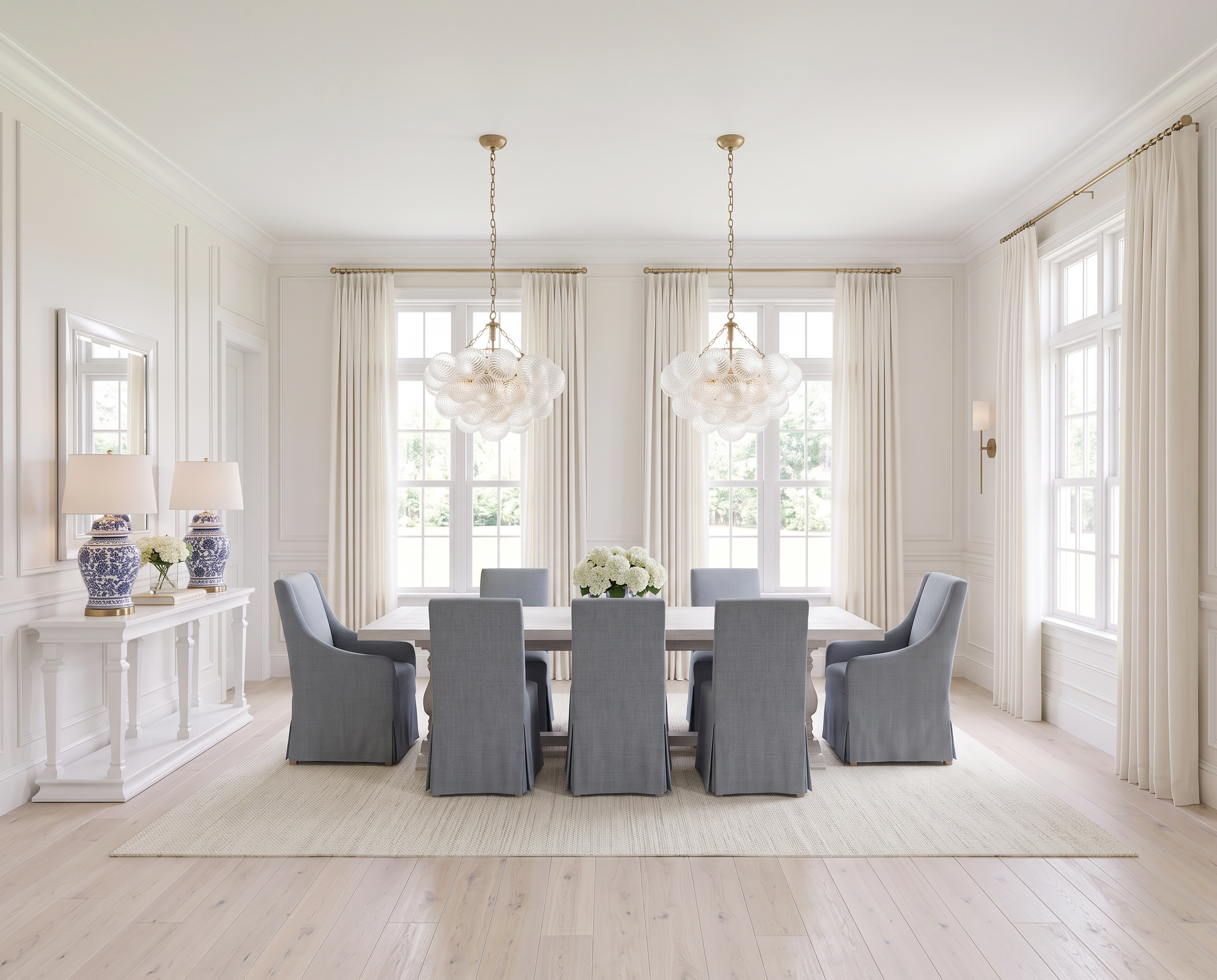
A small round chandelier centered over a very long rectangular table can look undersized even if its width technically follows the sizing formula. In that situation, I'd consider a wider or elongated chandelier, a linear fixture, or even two smaller chandeliers spaced evenly over the table.
If you're using two chandeliers, I wouldn't simply choose two fixtures that are each the size you would have used if there were only one. They should be smaller and work together as one lighting arrangement.
For an especially long table, I like to step back and look at the entire composition: table, chandelier, and room. The lighting should visually span enough of the table that it feels intentional rather than like one little fixture floating in the middle.
A square table behaves more like a round one. A centered chandelier with a balanced shape usually works beautifully because neither the table nor fixture has one dominant direction.
Regardless of table shape, I like the chandelier to have enough breathing room around it. It should anchor the dining table without getting so wide that it starts to feel almost as large as the tabletop itself.
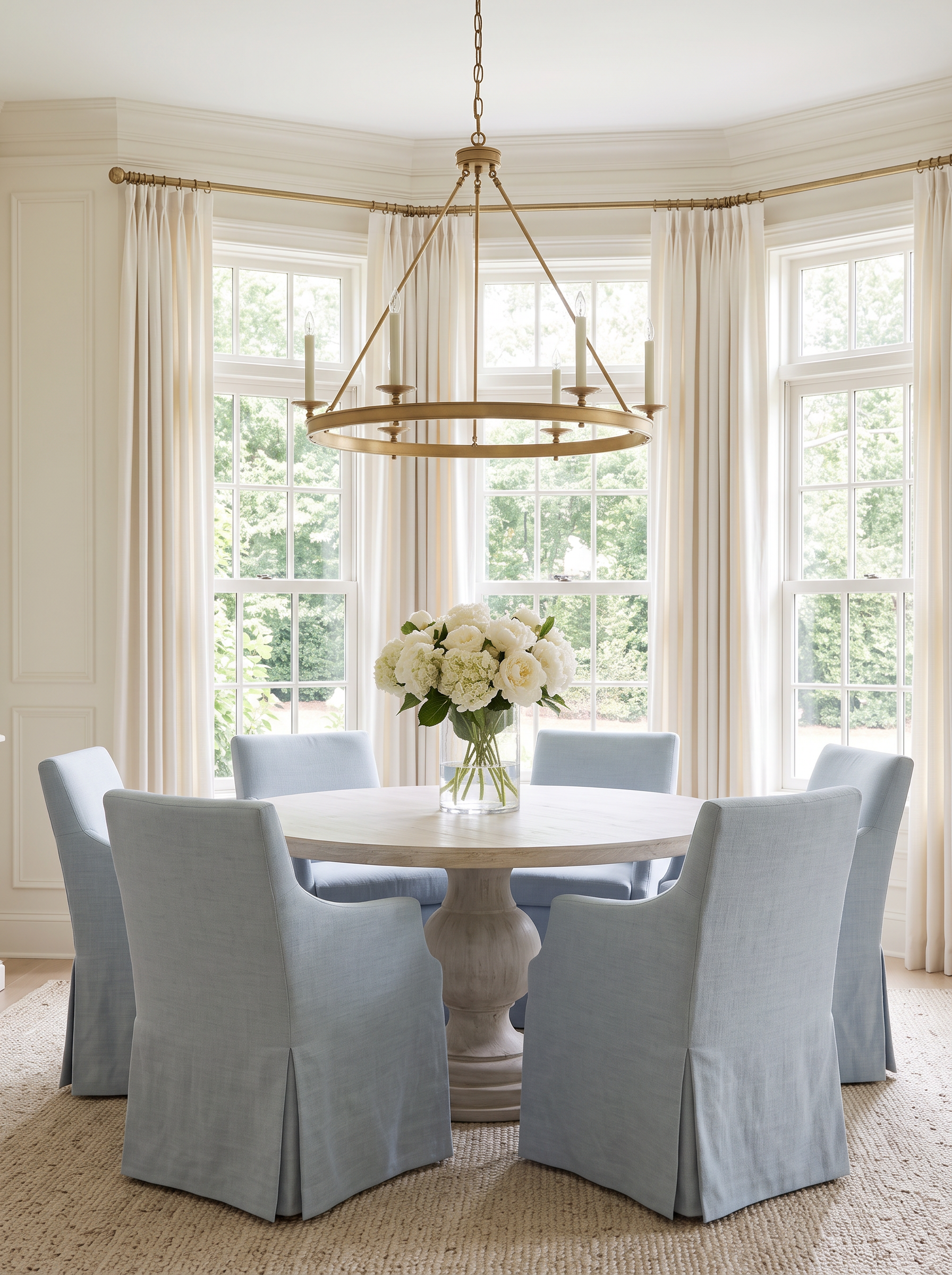
Get the hanging height right before deciding the chandelier is the wrong size.
Sometimes the chandelier isn't actually the wrong size. It's simply hanging at the wrong height.
For a standard 8-foot ceiling, about 30–36 inches from the tabletop to the bottom of the chandelier is a good starting point.
With taller ceilings, I'll generally raise the fixture somewhat rather than leaving it at exactly the same height. Adding roughly three inches for each additional foot of ceiling height can give you a useful starting point, but I still want to look at the actual room rather than letting a formula make the final decision.
The chandelier should feel visually connected to the table while still leaving comfortable sightlines across it.
If you're sitting at dinner and the fixture is directly in everyone's line of sight, it's probably too low. If it feels like it's floating somewhere near the ceiling completely unrelated to the table, it's probably too high.
And this is another place where the chandelier itself matters.
A large, open chandelier can often hang a little lower without feeling intrusive because you can see through it. A visually heavier fixture may need slightly more breathing room.
I’ve linked some similar chandelier finds I love below, including a mix of lighter, open designs and more substantial statement pieces.
Lighting is one place where I don't mind making a statement. I'd rather choose a chandelier with enough scale to actually anchor the dining table than spend money on a beautiful fixture that disappears once it's installed.
Measure first, use the sizing guidelines as a starting point, and then look at the fixture itself. The right chandelier should feel connected to the table, proportional to the room, and substantial enough that you notice it without wondering if it's about to join you for dinner.

You May Also Like…


Love classic home design?
Get one beautifully designed newsletter each month featuring:
New virtual room designs
Designer styling tips
Curated collections
Exclusive decorating inspiration