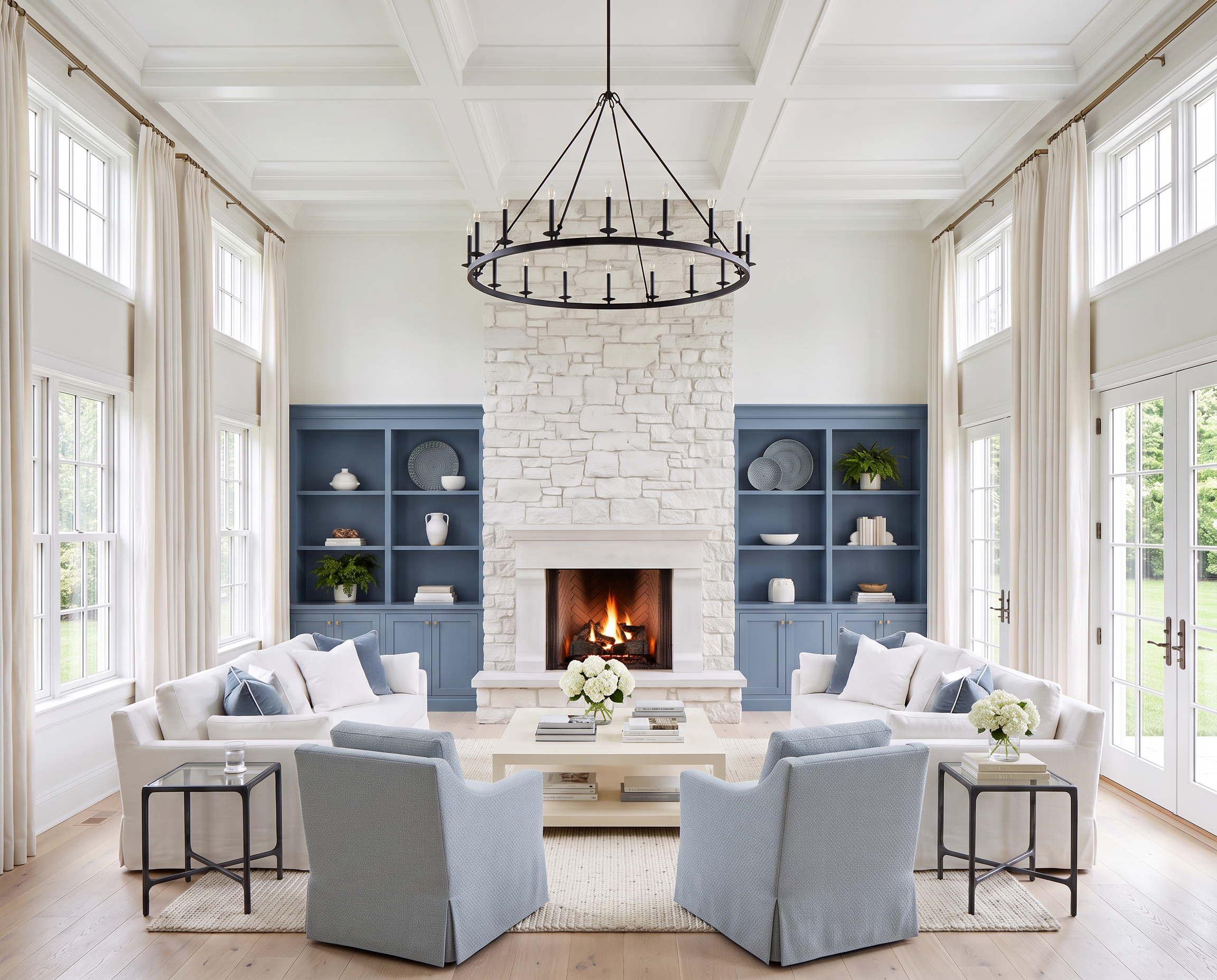
ⓘ Images in this post are AI-generated virtual design concepts intended for inspiration. Linked products reflect the style and feel of the space, but are not exact matches. This post contains affiliate links. As an Amazon Associate, I may earn on qualifying purchases.
Coffee tables are surprisingly easy to get wrong.
A table can be beautiful on its own and still look completely off once it’s sitting in front of your sofa. Too small and it feels like it's floating in the middle of the room. Too large and everyone has to turn sideways to get around it.
Before I worry about wood tone, shape, or styling, I like to get three things right: the length of the table, its height, and how much space it leaves around the seating.
Start with the length of your sofa.
For a standard sofa, I like a coffee table that's roughly two-thirds the length of the sofa.
So if your sofa is 84 inches long, somewhere around 56 inches is a good starting point. For a 72-inch sofa, I'd look around 48 inches.
It doesn't need to be exact. Think of the two-thirds rule as a way to narrow down your options rather than something that requires a calculator every time you shop.
What I'm really trying to avoid are the extremes.
A small coffee table in front of a long sofa tends to look like an accent table that wandered into the middle of the room. On the other hand, a table that's nearly as long as the sofa can feel heavy and make it difficult to move comfortably around the seating area.
I also pay attention to height.
Generally, I like the top of the coffee table to sit around the height of the sofa seat cushion or an inch or two lower.
A table that's noticeably taller than the seat can start to feel more like a dining table sitting in front of your sofa. One that's extremely low may look beautiful in a photograph but isn't always particularly convenient when you're actually trying to set down a drink.
This is one of those purchases where I always check the measurements before ordering. Product photos are terrible at communicating scale, especially when the table has been photographed without furniture around it.
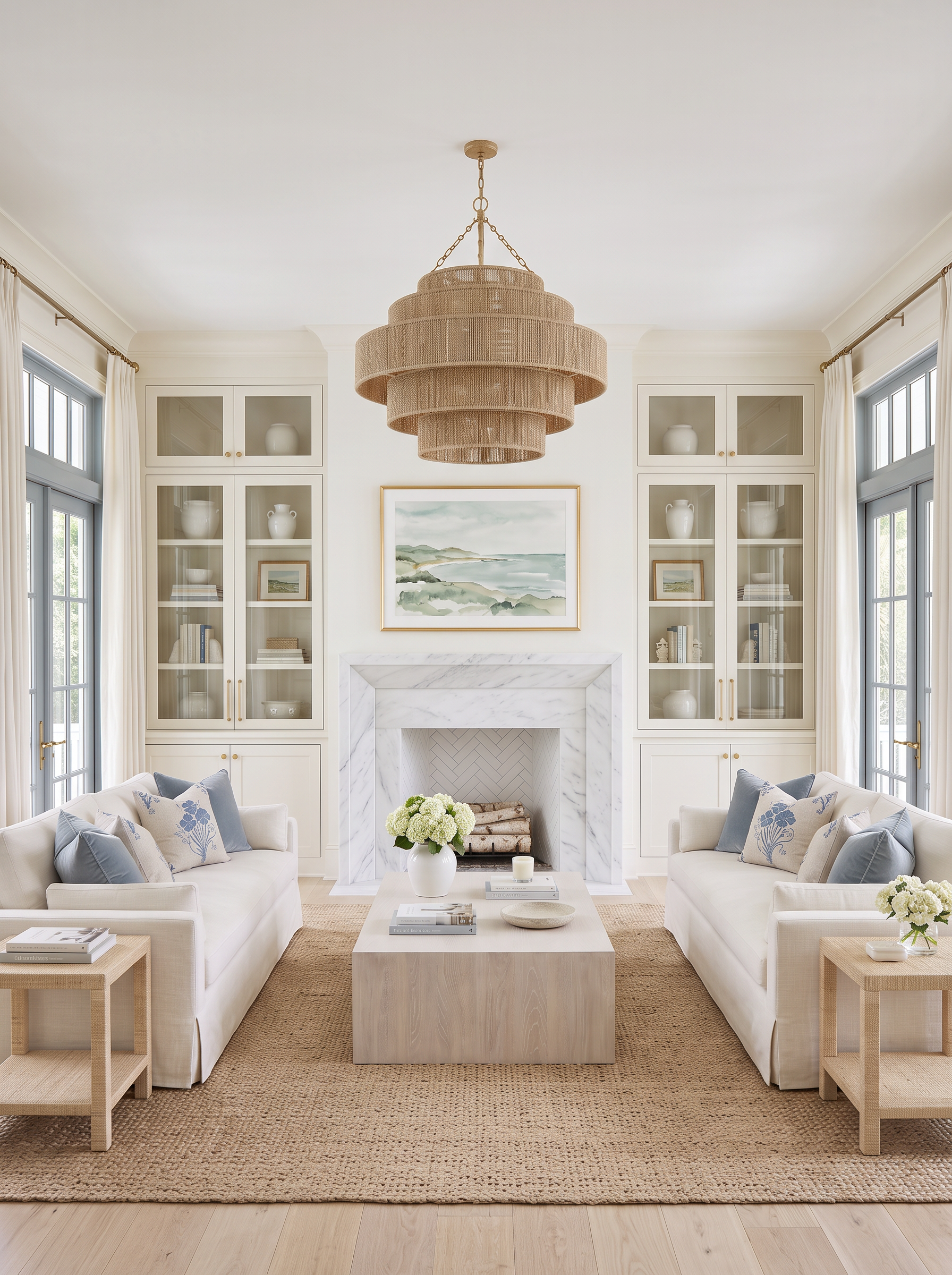
Rectangular, round, and sectional coffee tables work a little differently.
For a standard sofa, a rectangular coffee table is usually the easiest shape to work with. It follows the length of the sofa naturally and gives everyone along the seating area access to the table.
But rectangular isn't automatically the right answer.
A round coffee table can be wonderful in a smaller living room or anywhere the walking paths around the furniture are a little tight. Without sharp corners sticking into the room, it can make the whole arrangement easier to move around.
Round tables are also one of my favorite options when there are lots of straight lines in a room. Sofas, rugs, consoles, windows, and fireplaces are usually rectangular, so one round piece can soften everything a little.
An oval coffee table gives you some of the same advantages while still providing more length in front of a standard sofa.
Sectionals require a slightly different approach.
Rather than sizing the coffee table against the entire outside measurement of an L-shaped sectional, I look at the main usable seating area and the open space created by the sectional.
The coffee table needs to feel substantial enough for the sectional without filling every available inch inside that opening.
A rectangular or oval table can work beautifully with a longer sectional. A round table often works especially well with an L-shaped sectional because it sits naturally inside the open area and makes it easier to move around the corners.
For a very large sectional, sometimes one enormous coffee table isn't even the best solution. Two smaller tables, nesting tables, or a pair of coordinating pieces can give you the scale you need without putting one giant block of furniture in the middle of the room.
The same basic rule applies regardless of shape: the coffee table should relate to the seating around it rather than simply filling the empty floor space.
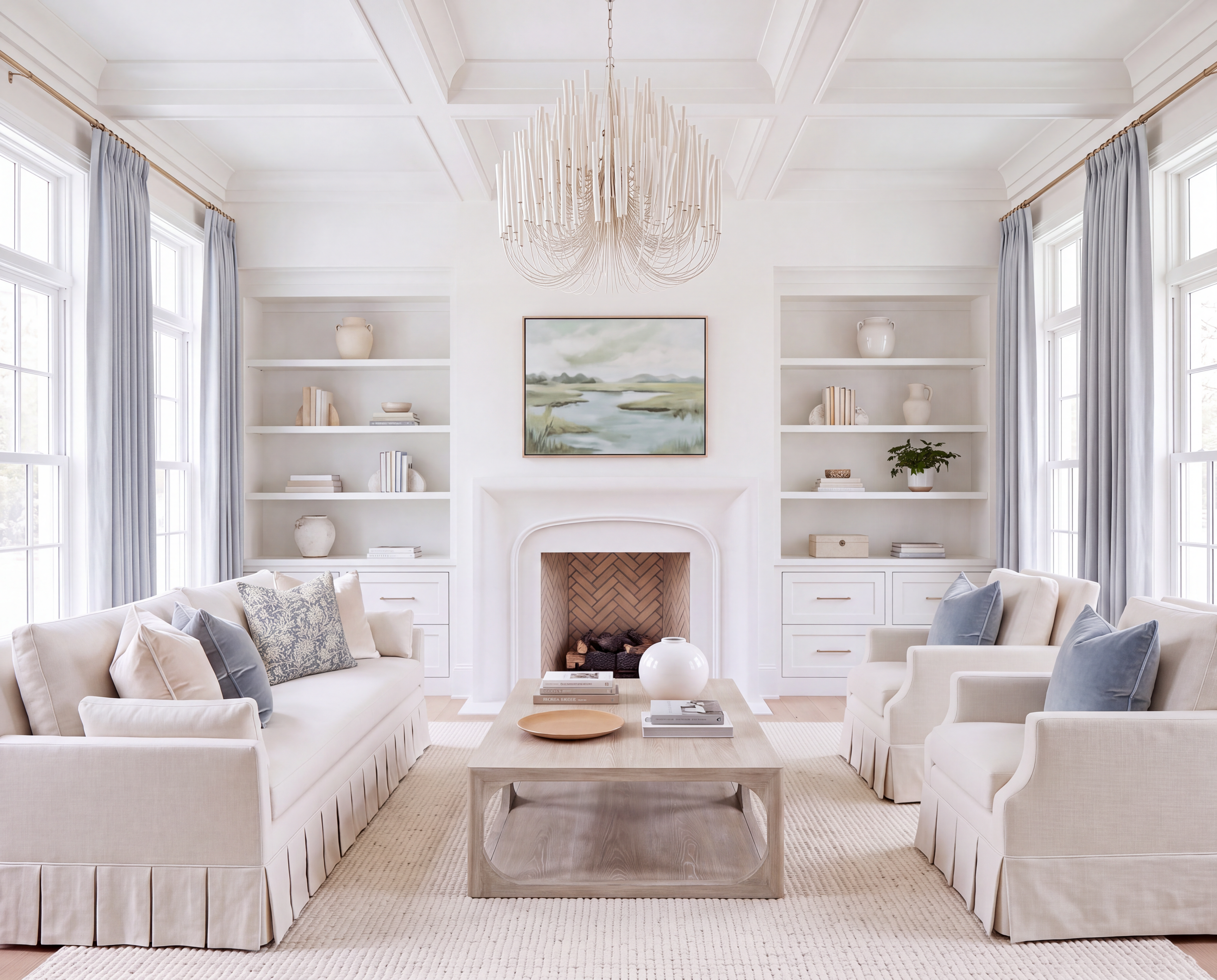
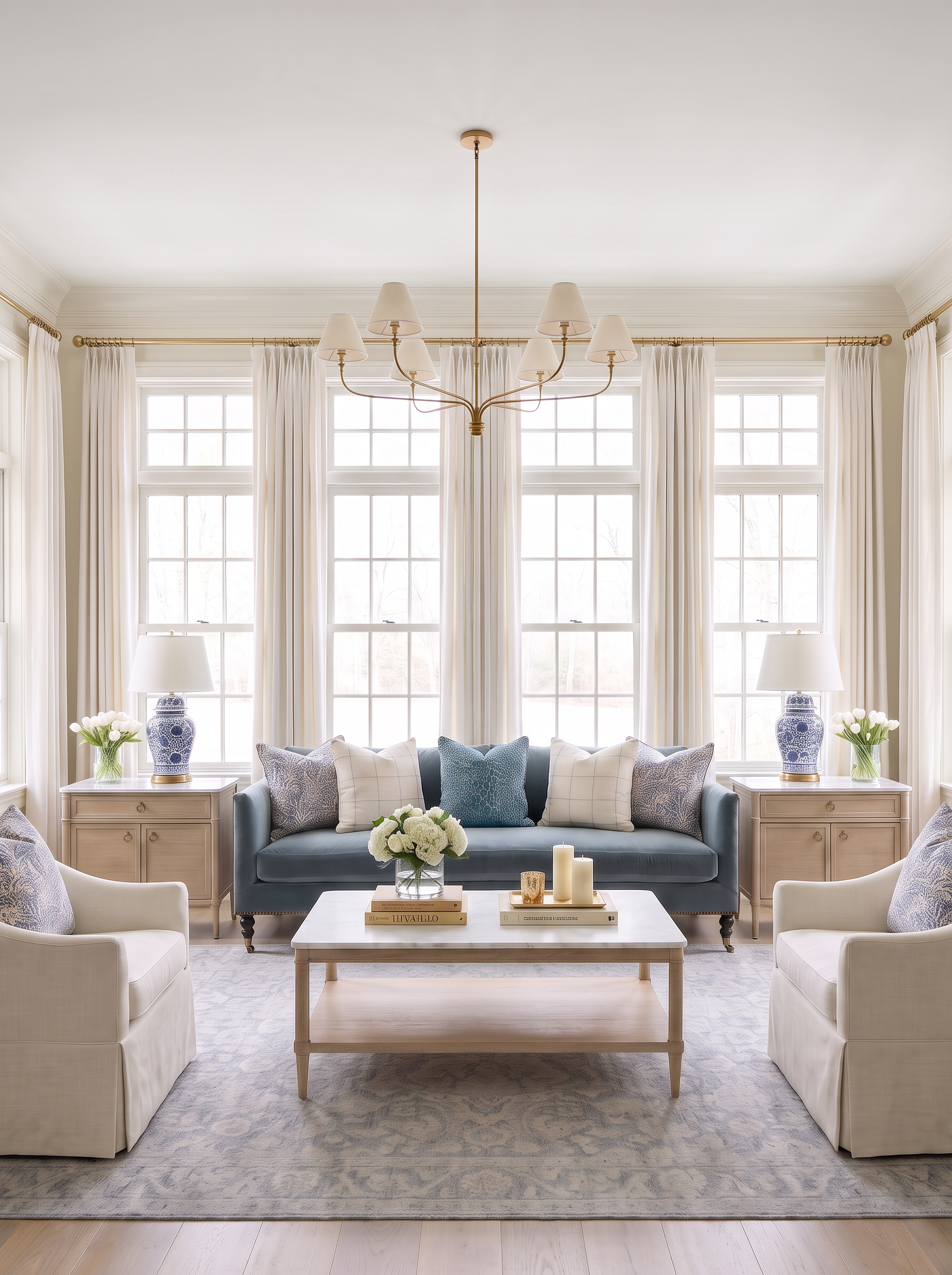
Leave enough room to actually walk around it.
The coffee table might fit on paper and still be too large for the room.
I generally like to leave about 12–18 inches between the sofa and coffee table, with somewhere around 14–16 inches often feeling comfortable.
That keeps the table close enough to actually use while still leaving room for your legs and for people to sit down and stand up comfortably.
Then look at what happens on the other side of the table.
If that's one of the main walkways through the room, you need considerably more breathing room there. Around 30 inches is a useful starting point for a true circulation path, although the actual room and furniture arrangement still matter.
A coffee table shouldn't turn the route through your living room into an obstacle course.
This is especially important in smaller rooms.
I'd rather choose a slightly smaller table and maintain comfortable circulation than squeeze in the technically “perfect” size and spend the next five years bumping into it.
And just like with rugs, painter's tape is incredibly helpful here.
Before ordering, tape the dimensions of the coffee table onto the floor. Then actually walk around it. Sit on the sofa. Stand up. See whether you can comfortably reach where the table would be.
It takes about five minutes and gives you a much better idea of scale than staring at the dimensions on a product page.
Once I know the proportions work, then I start thinking about the fun things—wood tone, finish, shape, storage, and how the table works with everything else in the room.
I've linked some similar coffee table finds I love below, including options for different sofa sizes and furniture arrangements.
The right coffee table doesn't need to perfectly follow a formula. It just needs enough scale to anchor the seating without taking over the room—and enough space around it that everyone can actually live there.

You May Also Like…


Love classic home design?
Get one beautifully designed newsletter each month featuring:
New virtual room designs
Designer styling tips
Curated collections
Exclusive decorating inspiration