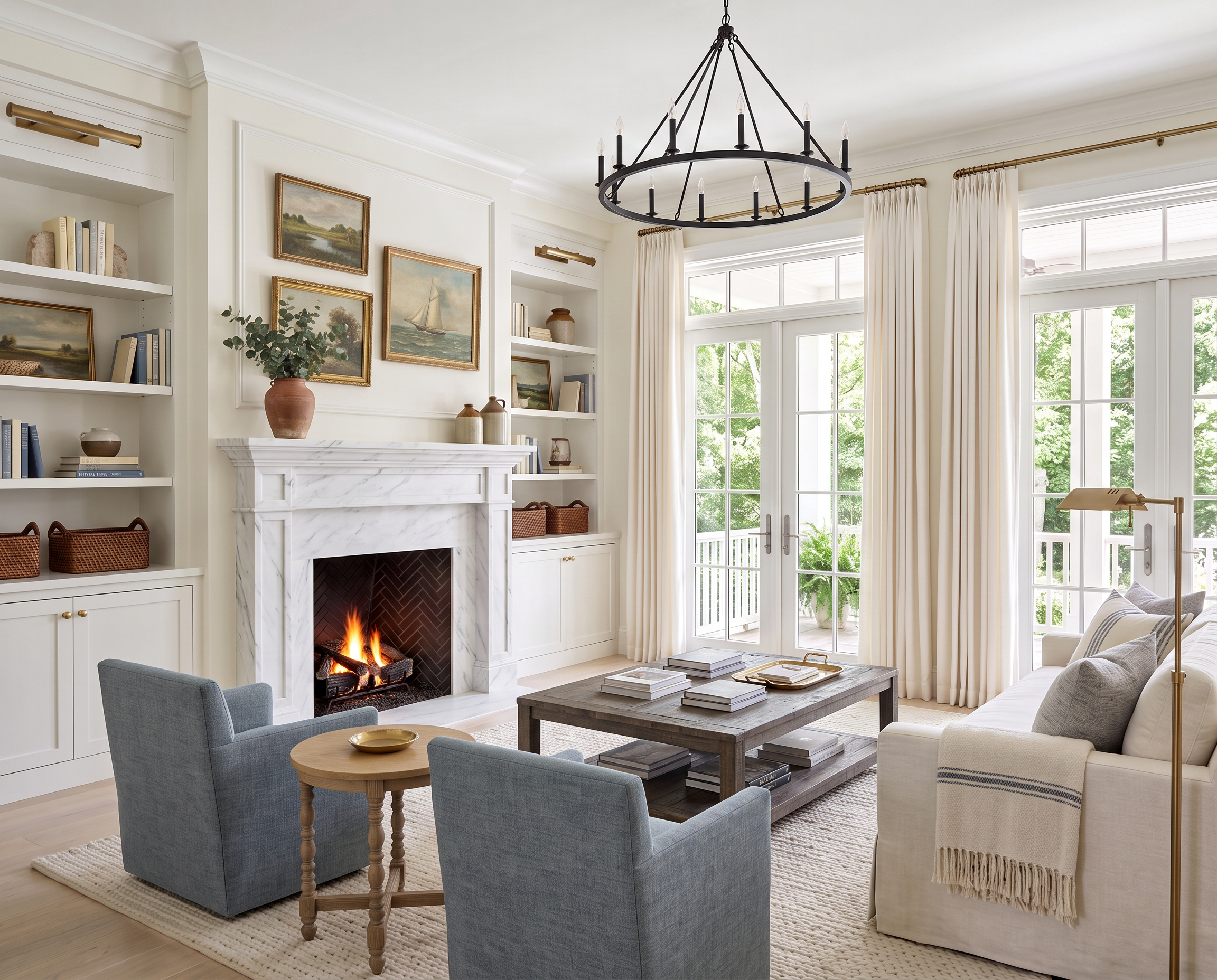
ⓘ Images in this post are AI-generated virtual design concepts intended for inspiration. Linked products reflect the style and feel of the space, but are not exact matches. This post contains affiliate links. As an Amazon Associate, I may earn on qualifying purchases.
You do not need to find a coffee table that's the exact same shade as your hardwood floors. In fact, I'd really rather you didn't.
A room usually feels much more interesting when the wood finishes look collected rather than purchased as one matching set. The trick is making different woods look intentional instead of like you simply got close to matching them and gave up.
I usually think about three things: which wood is already dominant in the room, whether the undertones work together, and whether each finish appears often enough to look like it belongs there.
Start with the wood tone you already have the most of.
Most rooms already have a dominant wood tone before you bring in a single piece of furniture.
If you have hardwood floors, they're probably it. In another room, it might be a large dining table, built-in cabinetry, exposed beams, or a substantial piece of furniture.
I don't try to match everything else to that wood. I use it as the starting point and build around it.
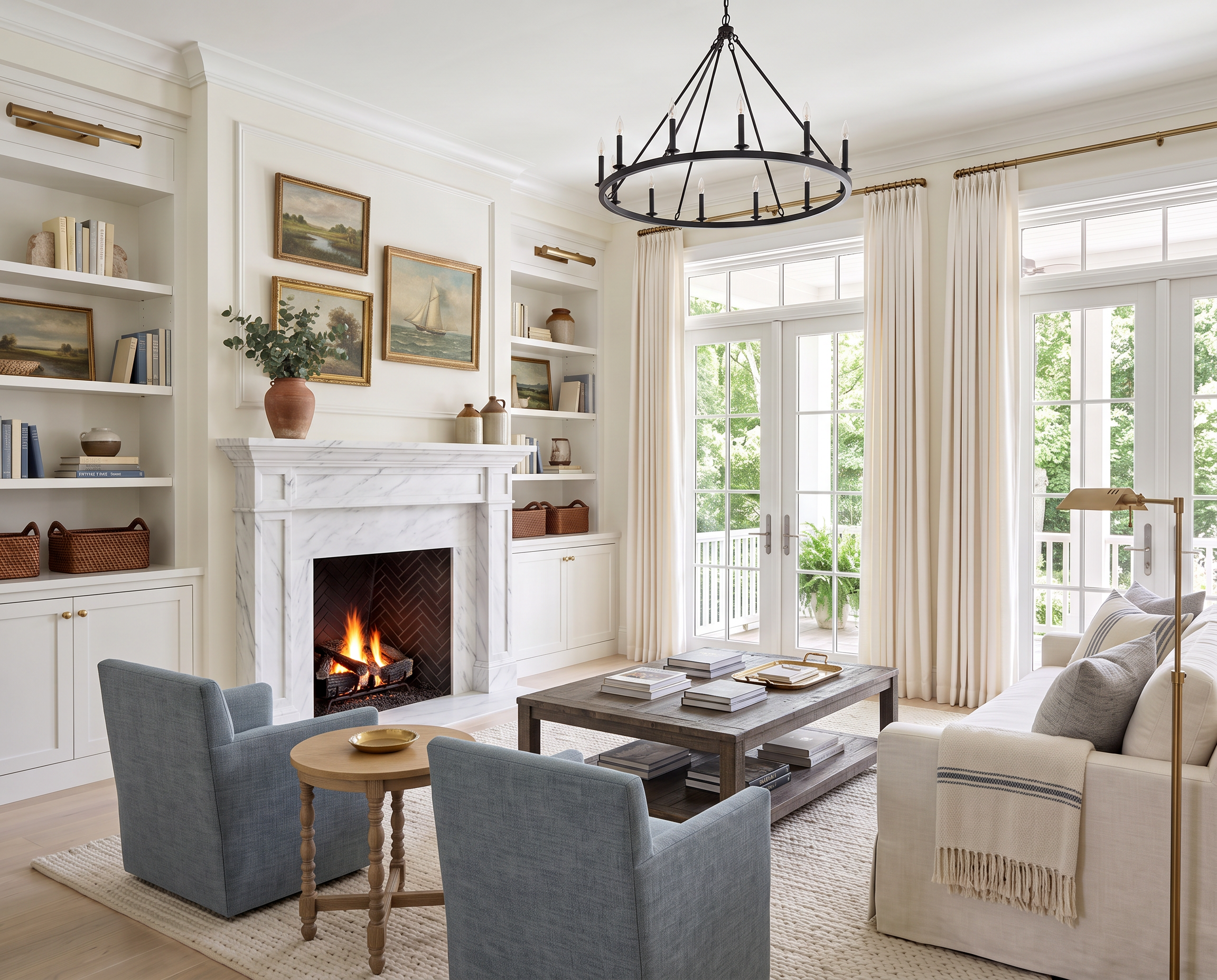
So if you have light oak floors, you absolutely can put a darker wood coffee table on top of them. In fact, I often prefer that contrast because the table doesn't disappear into the floor.
The same thing can happen in reverse. A room with dark floors can benefit from lighter wood furniture because it keeps all of that wood from becoming one large dark mass.
Where I tend to be more cautious is with woods that are almost the same, but not quite.
Two medium-brown finishes sitting right next to each other can sometimes look as though they were supposed to match and missed. A light oak paired with a noticeably deeper walnut, on the other hand, looks deliberate.
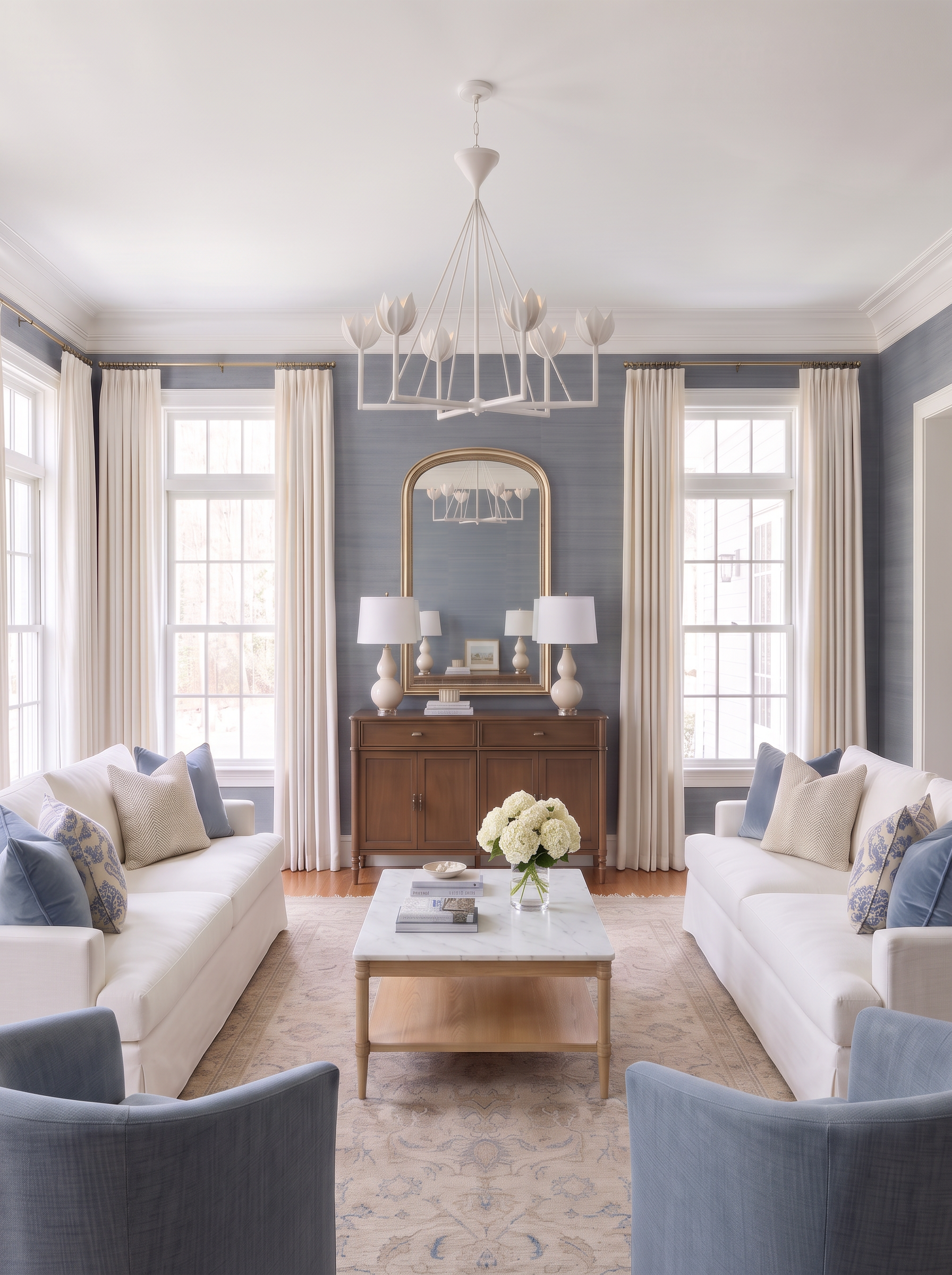
That's one of the reasons I don't think you need a matching furniture set to make a room feel pulled together. I'd much rather have pieces that complement one another than a coffee table, side tables, console, and cabinet that all look like they arrived in the same truck.
Pay attention to undertones before you worry about the exact color.
Two pieces of wood don't need to be the same shade, but it helps to notice whether the woods lean warm, cool, or fairly neutral.
Warm woods may have golden, honey, orange, or reddish undertones. Cooler woods can read a little grayer or more ashy.
You don't have to become a wood-undertone detective every time you buy a side table, but this is useful when something looks wrong and you can't quite figure out why.
A light warm oak and a much darker warm walnut can work beautifully together because even though their depth is completely different, there is still some relationship between them.
And you don't have to banish every wood that has a different undertone.
Sometimes contrast is exactly what a room needs. I just wouldn't introduce four or five unrelated finishes and expect a rug to somehow negotiate peace between all of them.
If the room is starting to feel busy, simplify somewhere else.
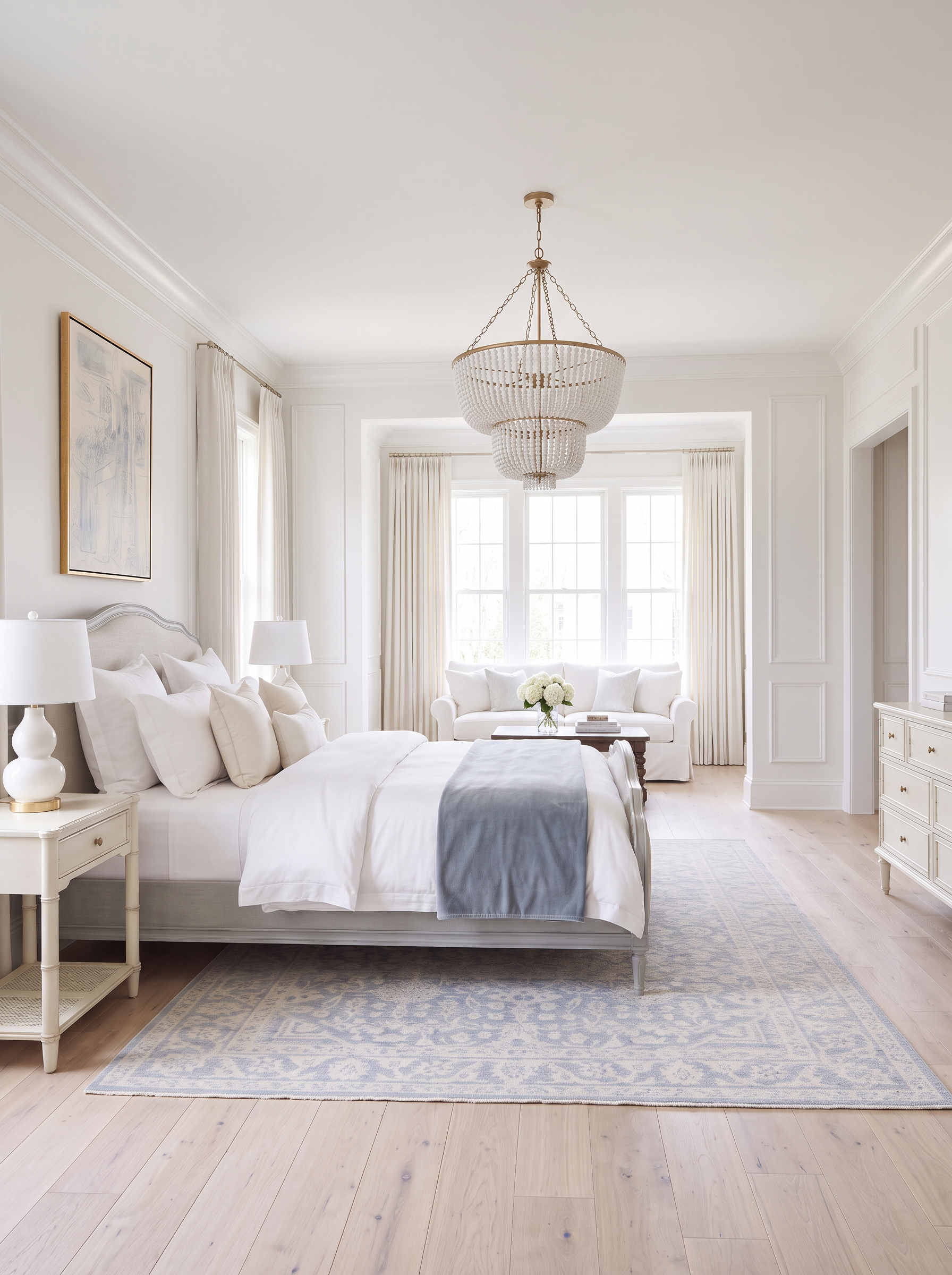
Painted furniture is especially useful for this. A black side table, creamy painted cabinet, upholstered piece, stone top, or metal accent can break up several wood finishes so they're not all sitting directly beside one another.
The goal isn't to follow a rigid formula. It's simply to make sure the different woods feel like choices rather than accidents.
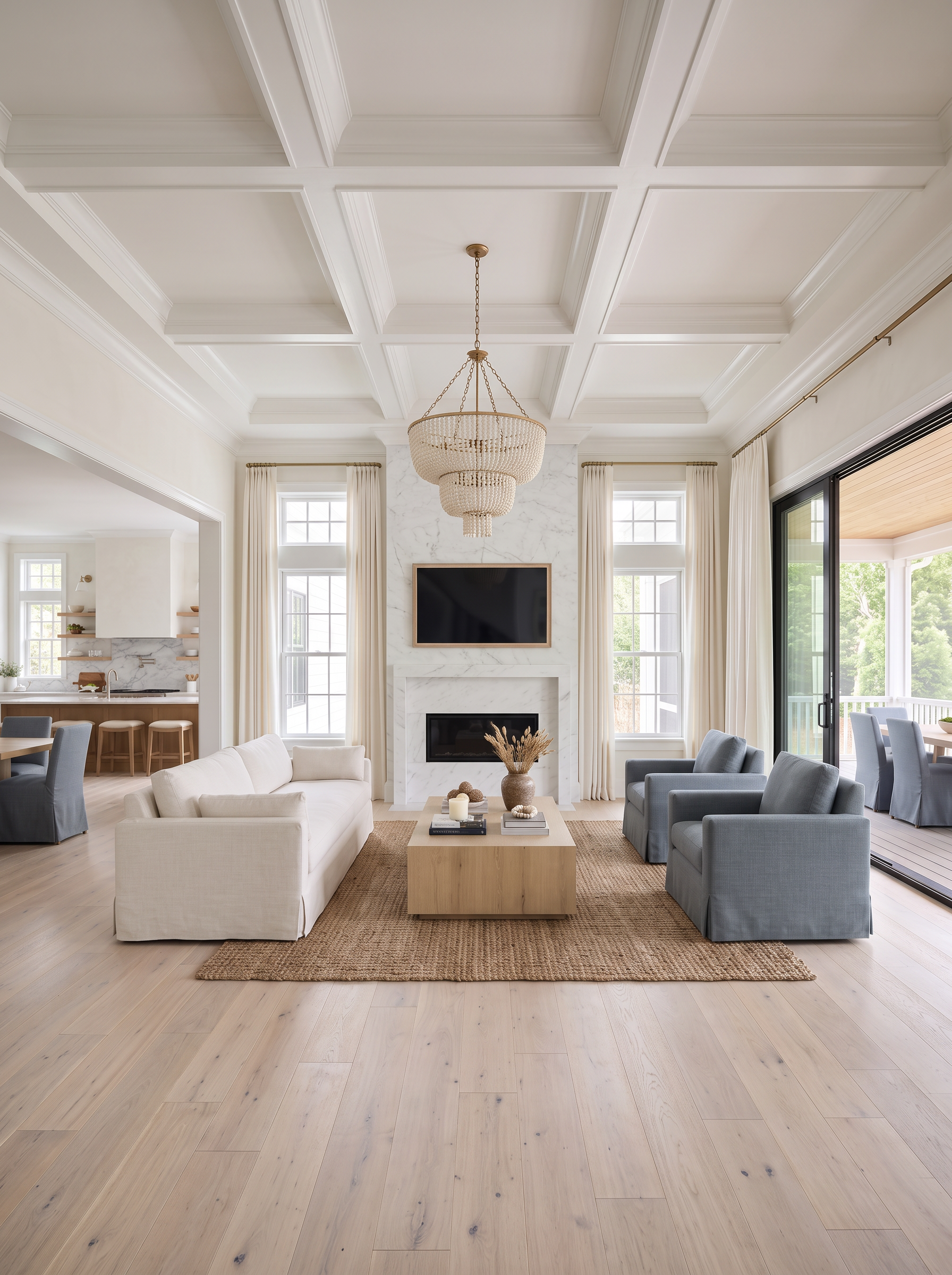
Repeat a wood tone so it doesn't feel like the odd piece out.
This may be the easiest trick of all.
If you introduce a noticeably darker wood coffee table into a room full of lighter finishes, give that darker tone a friend somewhere else.
It doesn't have to be another major piece of furniture.
A picture frame, lamp base, small side table, chair legs, decorative bowl, or other smaller detail can repeat the color just enough to connect it to the rest of the room.
The same idea works in a dining room. Maybe the dining table is a warm medium wood, the chairs are darker, and the sideboard is painted. Repeating the darker chair finish in a frame or another small detail helps everything feel related without requiring the sideboard to match either one.
I also like using rugs, upholstery, drapery, stone, metal, and painted pieces between wood finishes. Those materials give your eye a little break and keep the room from becoming wood-on-wood-on-wood.
I've linked some similar wood furniture finds I love below, with a mix of lighter, medium, and darker finishes.
If there's one thing I wouldn't do, it's carry a tiny wood sample around trying to perfectly match every new piece of furniture to something you already own.
Start with the dominant wood, pay attention to undertones, create enough contrast that the mix looks intentional, and repeat the finishes around the room.
A little variation is usually what makes a room feel like it came together over time—which is much more interesting than everything matching perfectly.

You May Also Like…


Love classic home design?
Get one beautifully designed newsletter each month featuring:
New virtual room designs
Designer styling tips
Curated collections
Exclusive decorating inspiration