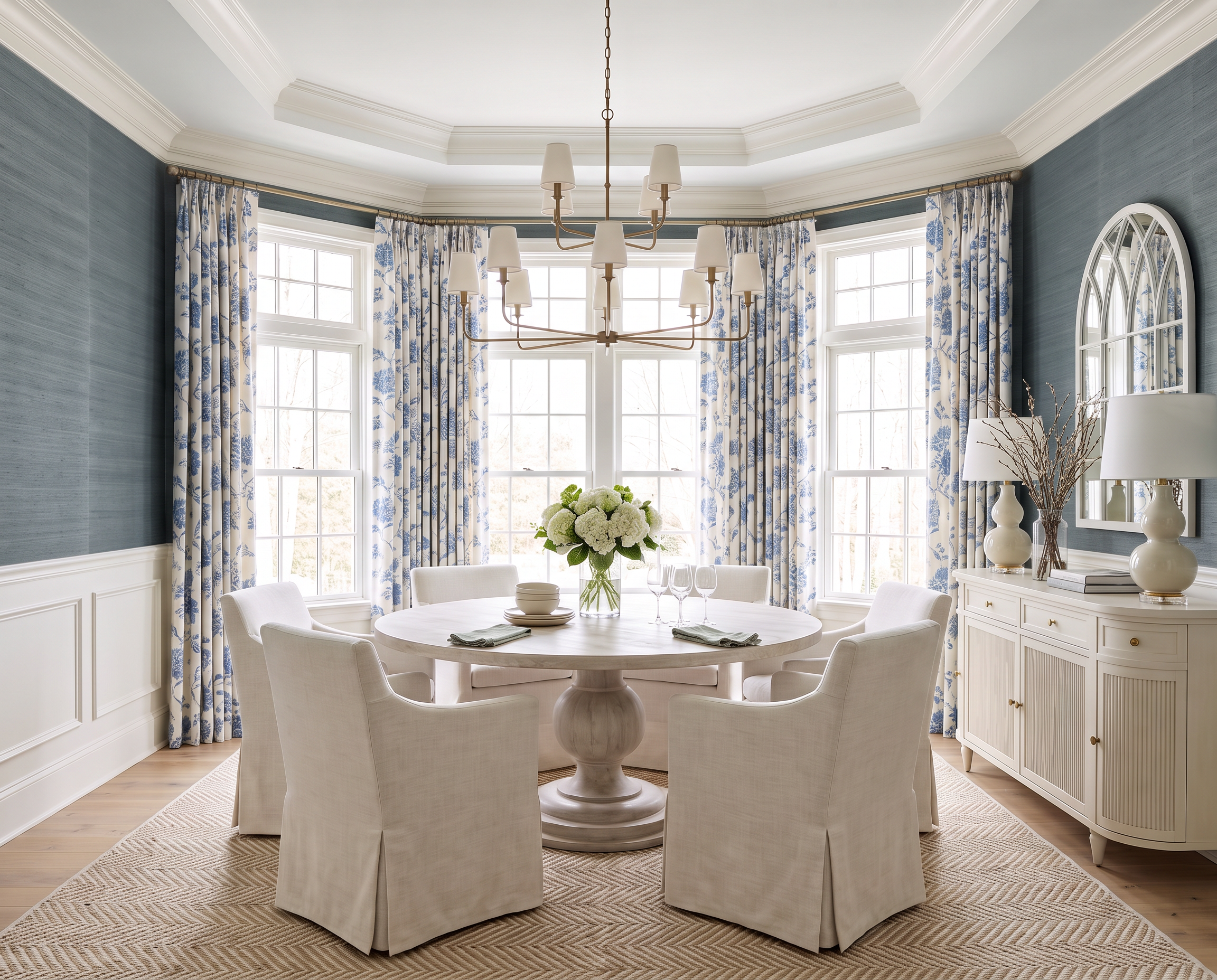
ⓘ Images in this post are AI-generated virtual design concepts intended for inspiration. Linked products reflect the style and feel of the space, but are not exact matches. This post contains affiliate links. As an Amazon Associate, I may earn on qualifying purchases.
Dining room rugs are a little less forgiving than living room rugs.
A rug can look perfectly fine when all of the chairs are tucked under the table, and then the minute someone pulls out a chair, the back legs fall off the rug and get caught on the edge every single time they sit down.
So when I'm choosing a rug for a dining room, I don't really size it for the table. I size it for the table and the chairs.
Once you think about it that way, figuring out the right rug size gets much easier.
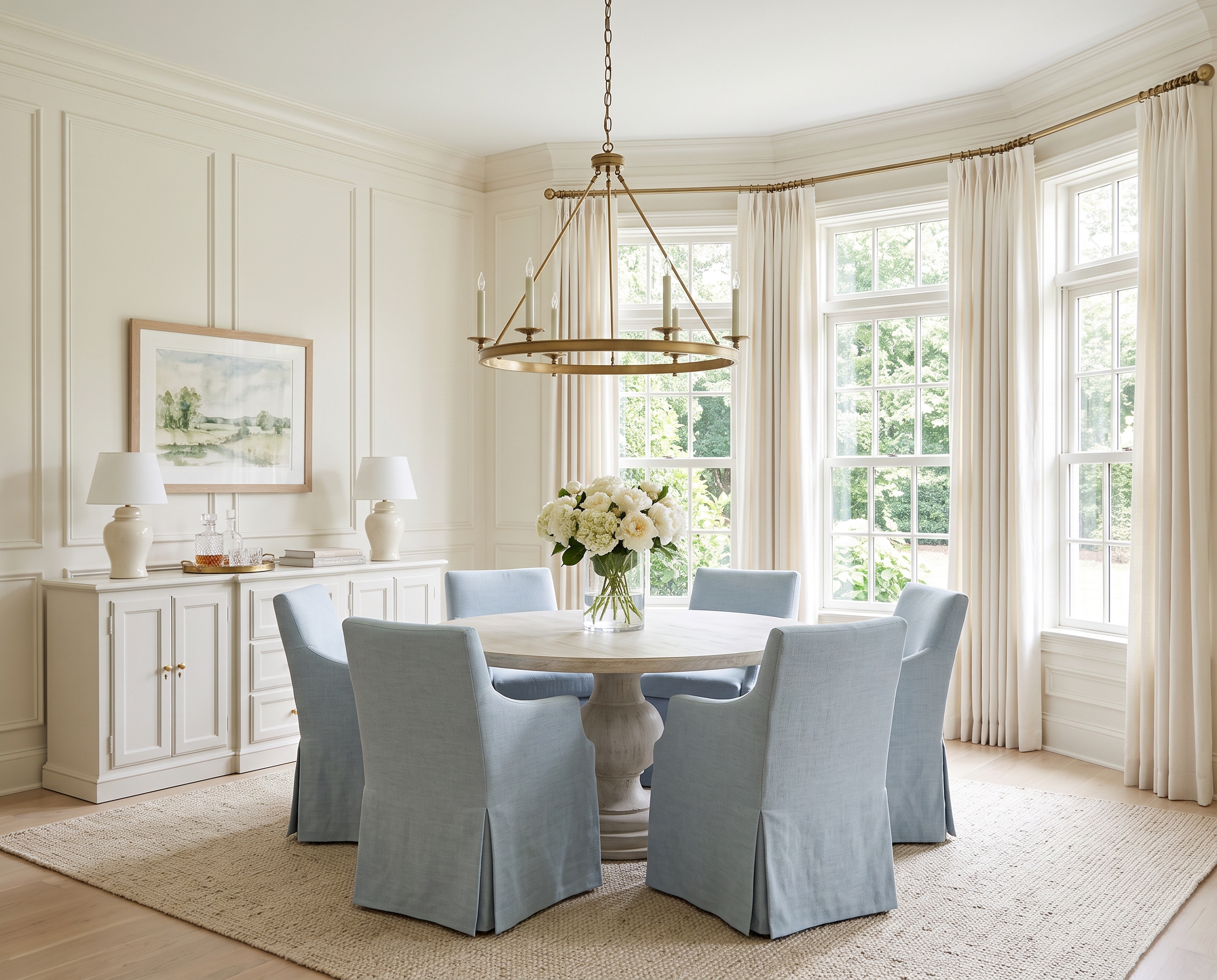
Start with your table measurement, then add room for the chairs.
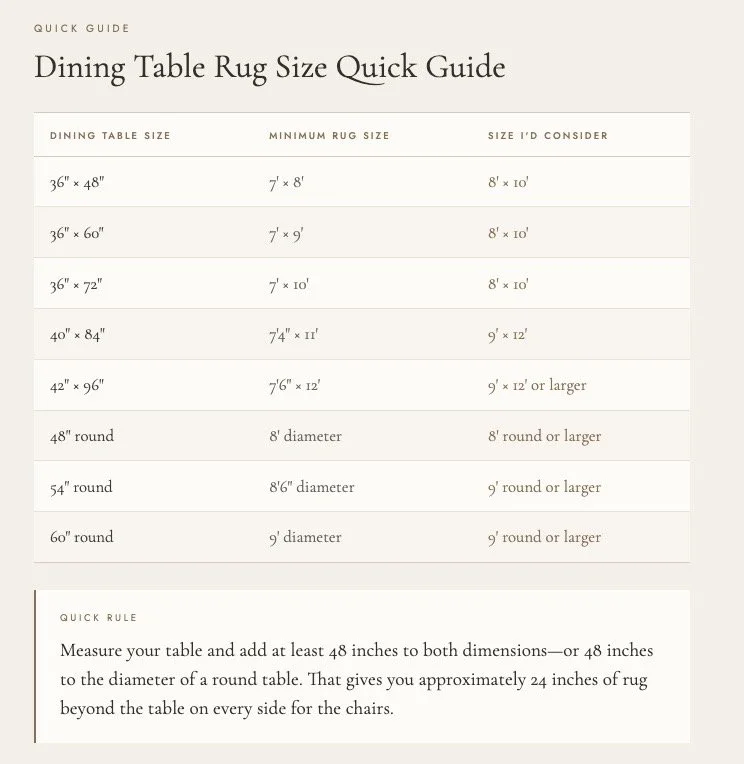
As a starting point, I like a dining room rug to extend at least 24 inches beyond the edge of the table on every side.
That means you can take the dimensions of your table and add at least 48 inches to both the length and width to find the minimum rug dimensions you should be considering.
For example, if your table measures 36 by 72 inches, adding 24 inches to every side gives you a minimum footprint of about 84 by 120 inches, or 7 by 10 feet. Since rugs don't always come in the exact size your math would like them to, I'd typically move up to the closest standard size that works in the room—often an 8x10 in this example.
And if the room gives you enough space, going a little more generous can be even better.
The important part is what happens when someone actually uses the chair.
Pull one out as though you're about to sit down. Ideally, the back legs should still be comfortably on the rug rather than sitting right at the edge.
This is why I don't love choosing a dining rug based entirely on a chart that says something like “six-person table = 8x10.” Two six-person tables can have completely different dimensions, and dining chairs vary in depth too.
Measure your table and your chairs first. Then use the standard rug sizes to figure out which one makes sense.
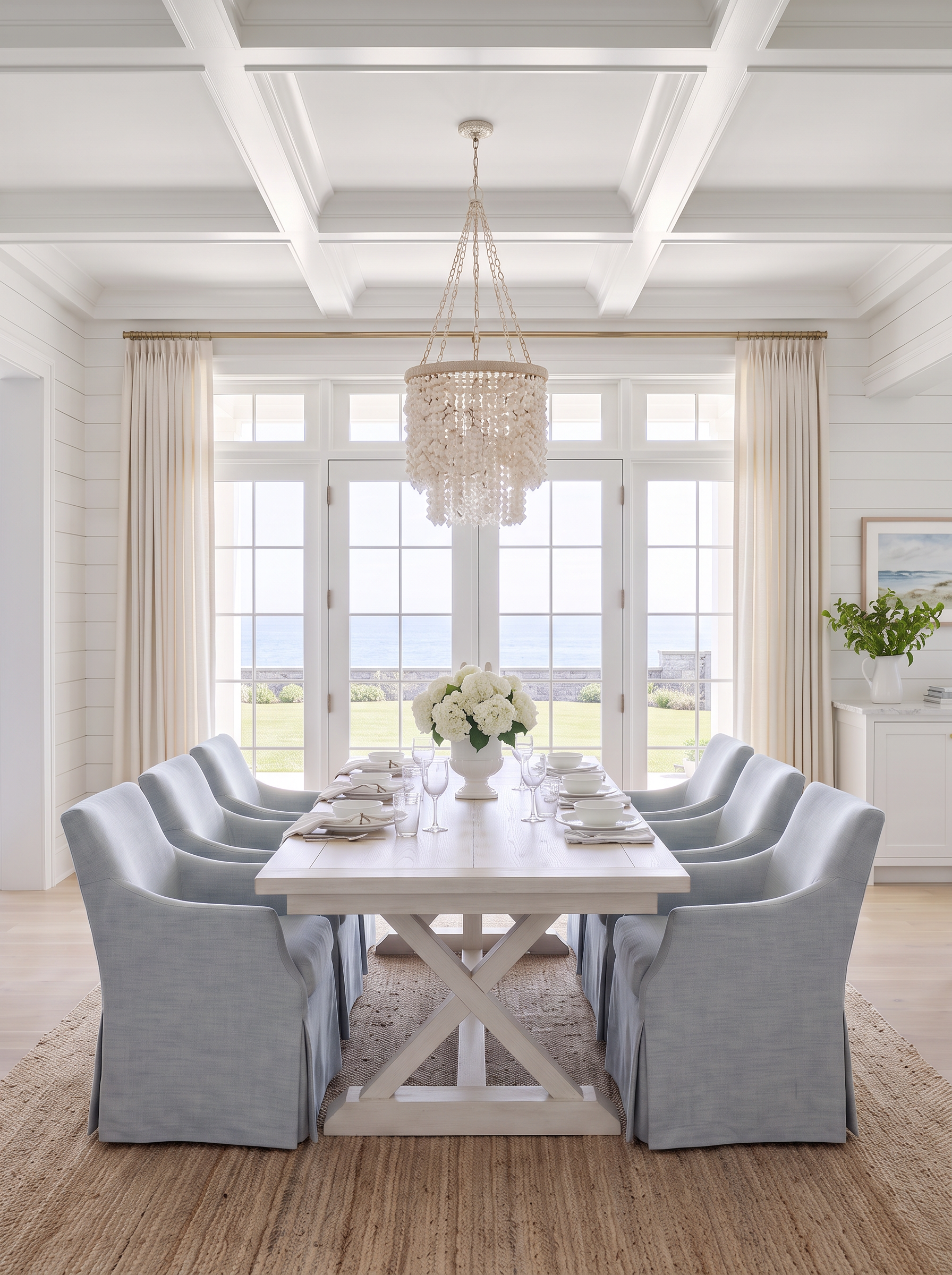
Round and rectangular tables need slightly different thinking.
For a rectangular dining table, a rectangular rug is usually the easiest choice because the proportions naturally follow one another.
An 8x10 works under plenty of smaller and standard dining tables, while larger or longer tables may need a 9x12 or even a 10x14.
But I wouldn't choose one of those sizes based on the number of chairs alone.
A long eight-person table and a more compact eight-person table aren't necessarily going to need the same rug. The actual table dimensions still matter more than the seating count.
For a round table, use the same basic rule but start with the diameter.
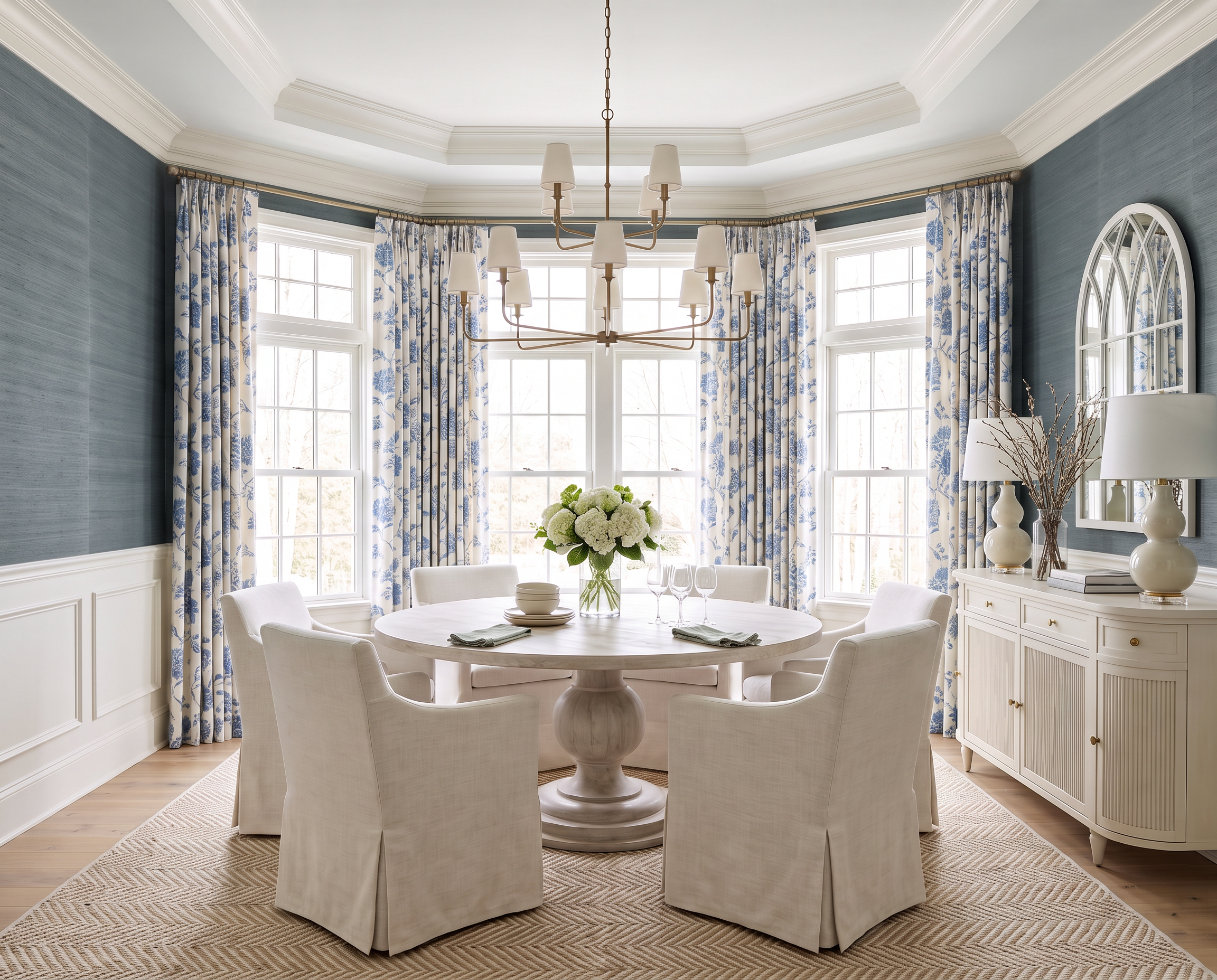
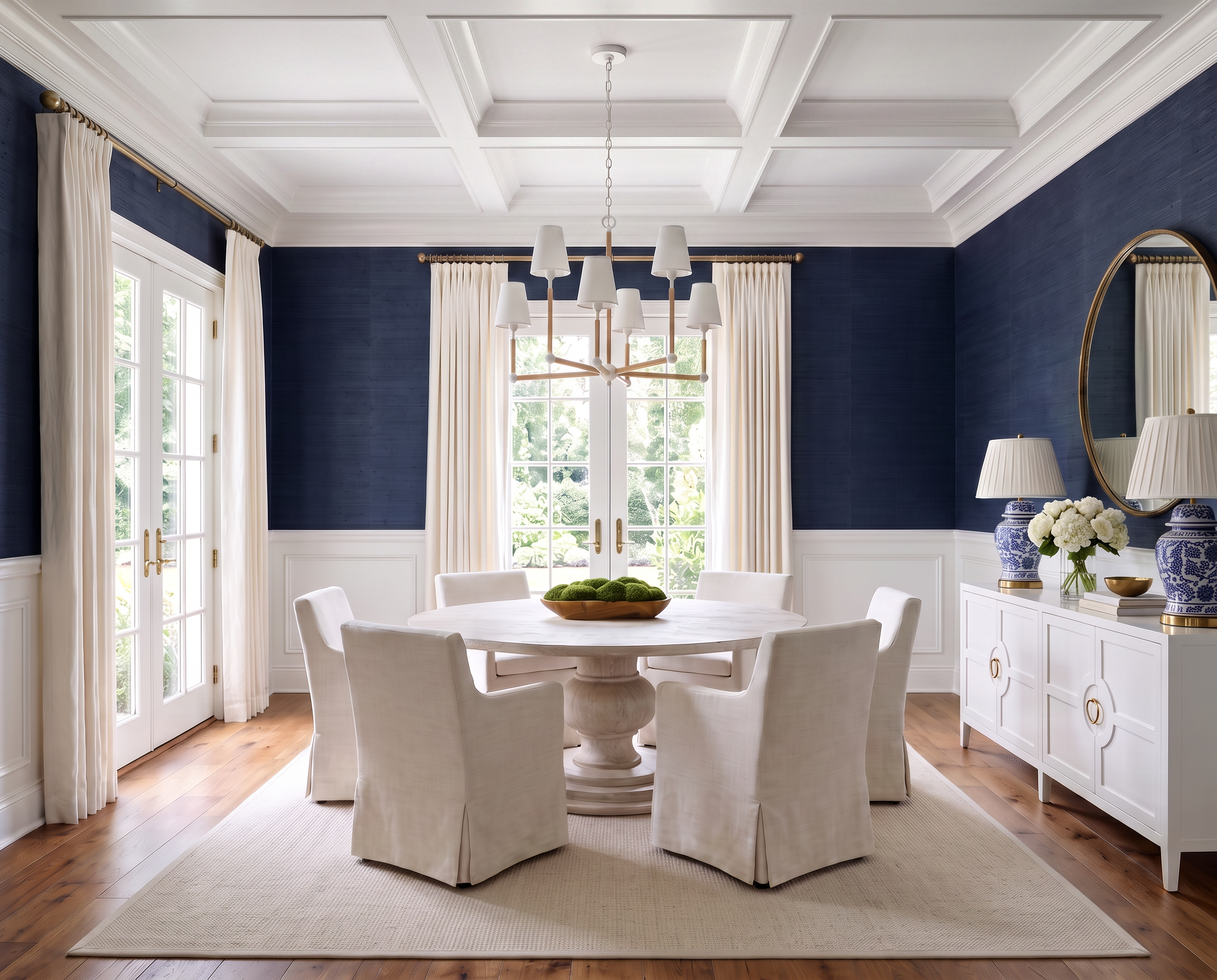
If you have a 48-inch round table, adding 24 inches on every side brings you to a minimum rug diameter of 96 inches—or an 8-foot round rug.
A round rug under a round table can look beautiful because the shapes relate so naturally to one another, but you don't have to use a round rug just because the table is round.
A larger rectangular or square rug can work too, particularly if that shape makes more sense with the proportions of the room. What matters most is that every chair has enough rug behind it to move comfortably.
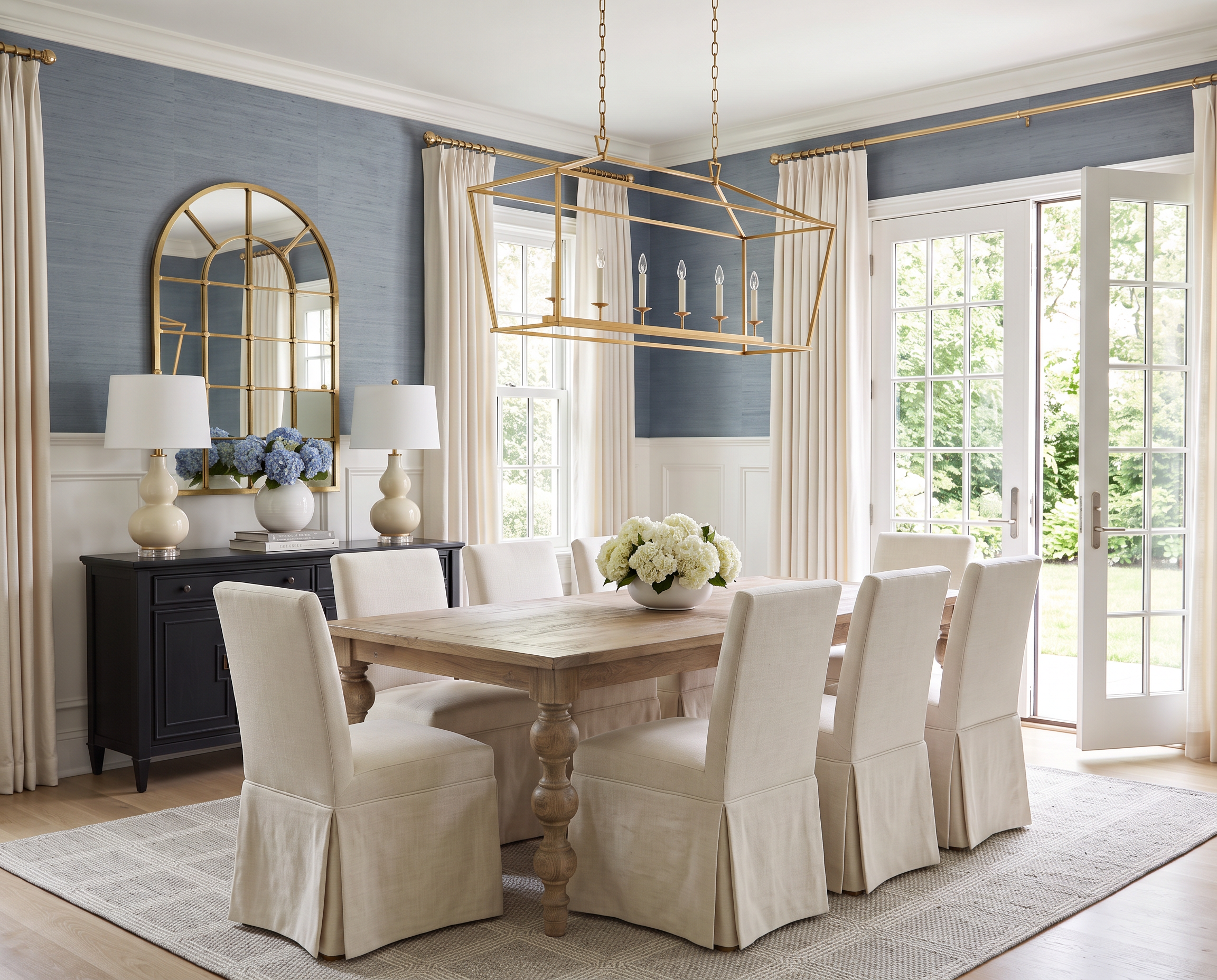
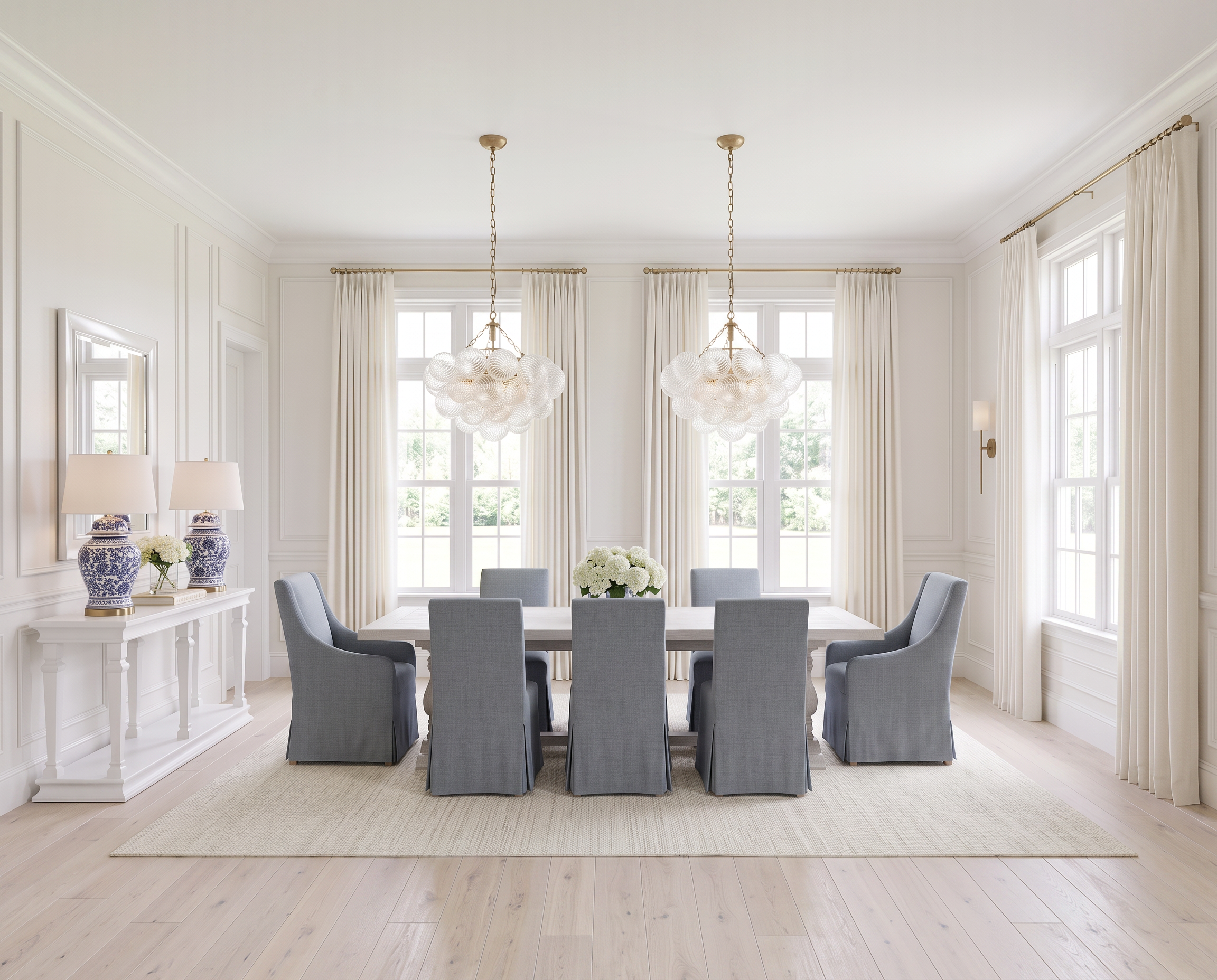
Make sure the rug fits the room, not just the table.
This is the part where the math can technically be right and the rug can still be wrong.
You might calculate that your table needs a 9x12, only to discover that a 9x12 nearly touches the walls or runs awkwardly underneath the sideboard.
I like to see some exposed flooring around a dining rug so it still reads as an area rug rather than almost-wall-to-wall carpet.
I also generally don't want the rug wandering halfway underneath a buffet or sideboard just because we're trying to force a larger size into the room.
If the rug you need to accommodate the chairs simply doesn't fit comfortably in the dining room, I'd rather reconsider using a rug there than go down several sizes and spend every meal fighting with chair legs catching the edge.
And this is another place where painter's tape is your friend.
Tape out the rug dimensions on the floor, put the table and chairs where they'll actually sit, and pull the chairs out. You'll know very quickly whether the size works.
I'd also pay attention to the rug itself.
Dining rooms are hardworking spaces. Chairs are constantly moving, crumbs happen, drinks spill, and apparently no one has ever eaten spaghetti without at least a small amount ending up somewhere it wasn't supposed to.
A lower-pile or flatter rug is usually much easier to live with under a dining table than something very thick or shaggy. Chair legs move more easily across it, and cleaning is generally simpler.
I've linked some similar rug finds I love below in several different sizes and styles.
If you remember only one thing, make it this: don't size the rug for the table with the chairs tucked in. Size it for the way the dining room actually gets used.
Give those chairs enough room to stay on the rug when they're pulled out, and you're already most of the way there.

You May Also Like…

Love classic home design?
Get one beautifully designed newsletter each month featuring:
New virtual room designs
Designer styling tips
Curated collections
Exclusive decorating inspiration