ⓘ Images in this post are AI-generated virtual design concepts intended for inspiration. Linked products reflect the style and feel of the space, but are not exact matches. This post contains affiliate links. As an Amazon Associate, I may earn on qualifying purchases.
Curtains are one of those things that can make a room look much more finished—or make perfectly good windows look oddly small.
Curtains are one of those things that can make a room look much more finished—or make perfectly good windows look oddly small.
And the good news is that the curtains themselves don't necessarily need to be expensive. Where you hang them matters just as much.
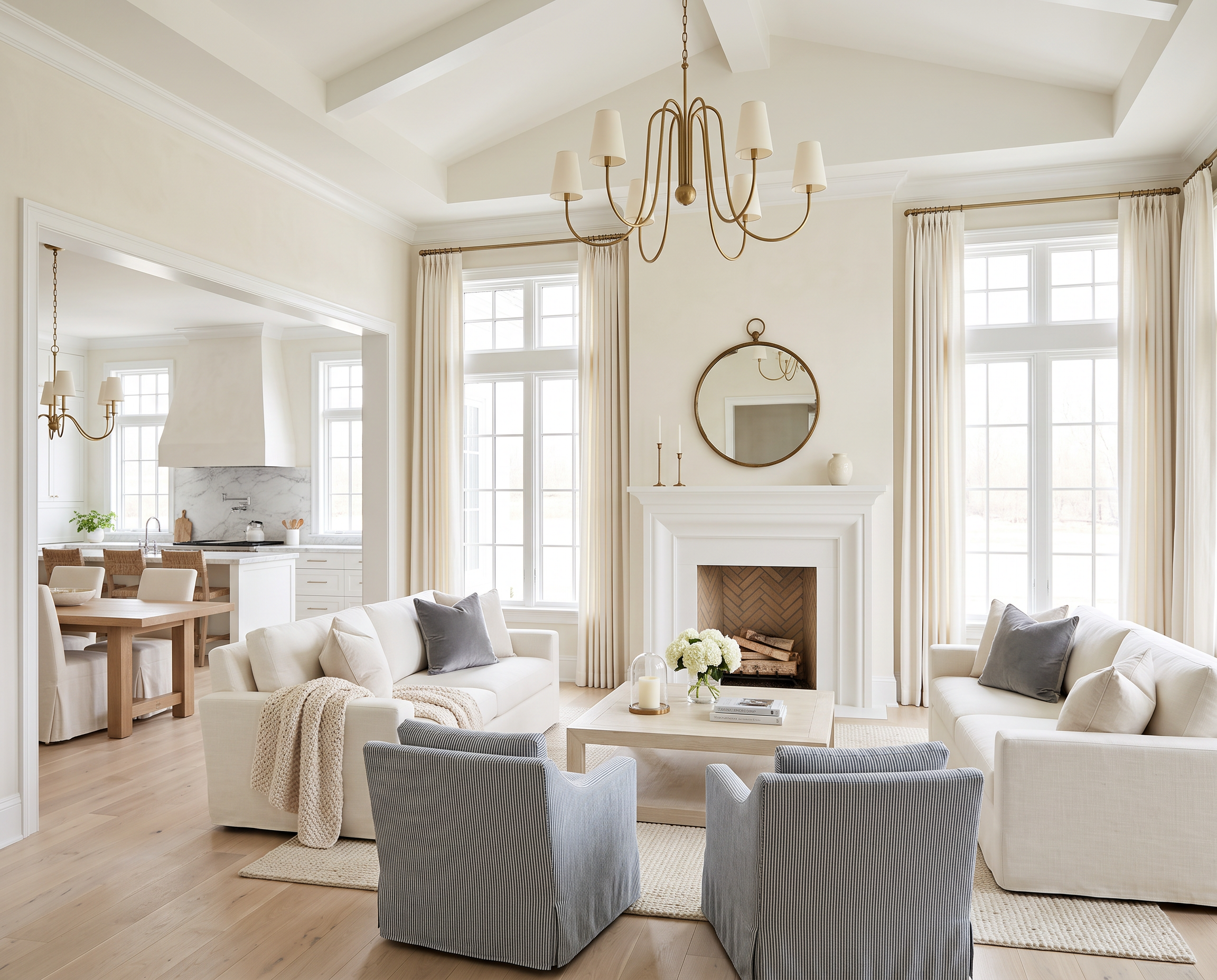
Hanging the rod higher and extending it beyond the window can make the window look larger, let in more natural light, and give even ready-made drapery a much more polished look.
Here’s how I like to decide where the curtain rod should go, how wide it should extend, and where the panels should hit the floor.
Hang the curtain rod higher than the window frame.
One of the easiest ways to make a window feel taller is to stop using the top of the window trim as the automatic place for the curtain rod.
For a standard room, about 4–6 inches above the window frame is a good starting point. If there’s more wall space between the window and ceiling, I often like going higher.
The exact measurement depends on the ceiling height, crown molding, and proportions of the window. The goal is really to draw your eye upward rather than create a horizontal line right above the trim.
If there’s crown molding, I generally like the rod to sit comfortably below it rather than crowding it.
And if there’s very little wall space above the window, I’d rather take the drapery almost to the ceiling than squeeze a rod awkwardly into the few inches immediately above the trim.
Very tall or vaulted rooms are a little different. I wouldn't automatically take the rod all the way to a 12- or 14-foot ceiling just because it's there. In those rooms, I look at the proportions of the wall and window together and choose a height that makes the window feel taller without making the drapery look strangely disconnected from it.
The measurement can change from room to room. What I want to avoid is a curtain rod that visually chops the wall off right at the top of the window.
Give the curtains somewhere to go when they're open.
Height gets a lot of attention, but width can make just as much difference.
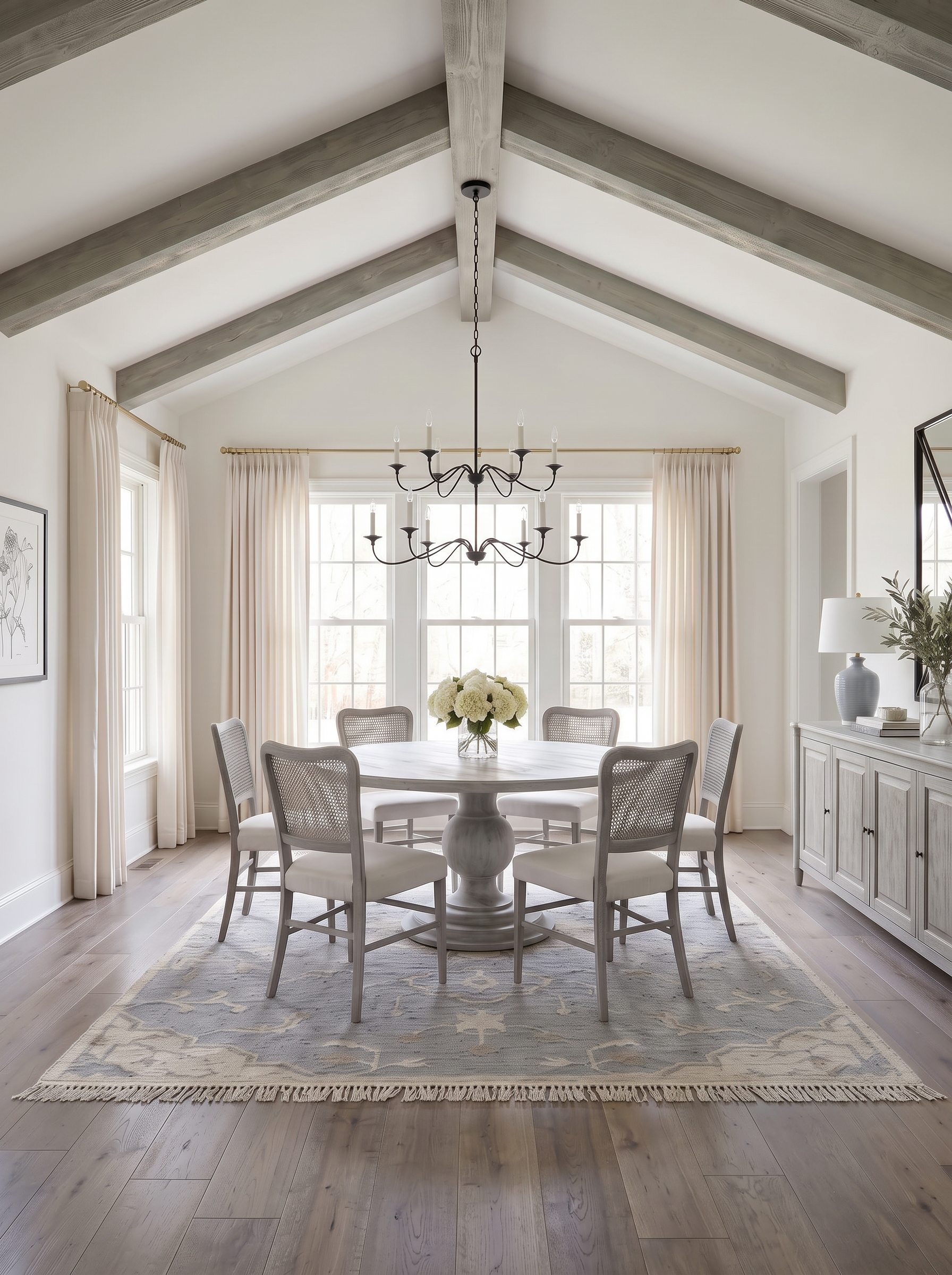
I like the curtain rod to extend beyond the actual window frame so the panels can sit mostly outside the glass when they're open. That makes the window appear wider and, more importantly, keeps beautiful natural light from being covered by several inches of fabric.
Extending the rod at least several inches beyond each side is a good starting point. If you have plenty of wall space, going wider can look even better—especially on a narrow window that could use a little more visual presence.
This is one of those places where I wouldn't get overly attached to a single number.
A narrow window on a large wall may look much better with the rod extended farther. A window tucked close to a corner obviously isn't going to give you that option.
Instead, look at the entire wall and think about where you want the panels to sit when they're open. Ideally, most of the fabric should frame the window rather than cover it.
And don't forget about fullness.
Drapery panels should still have some softness and fullness when they're closed—not look like two very determined pieces of fabric stretched across the window.
If you're using ready-made panels, sometimes that simply means buying an extra panel or two rather than trying to make one narrow panel do all the work.
Let the panels reach the floor.
Once the rod is in the right place, the last thing I want is for the curtains to stop several inches above the floor.
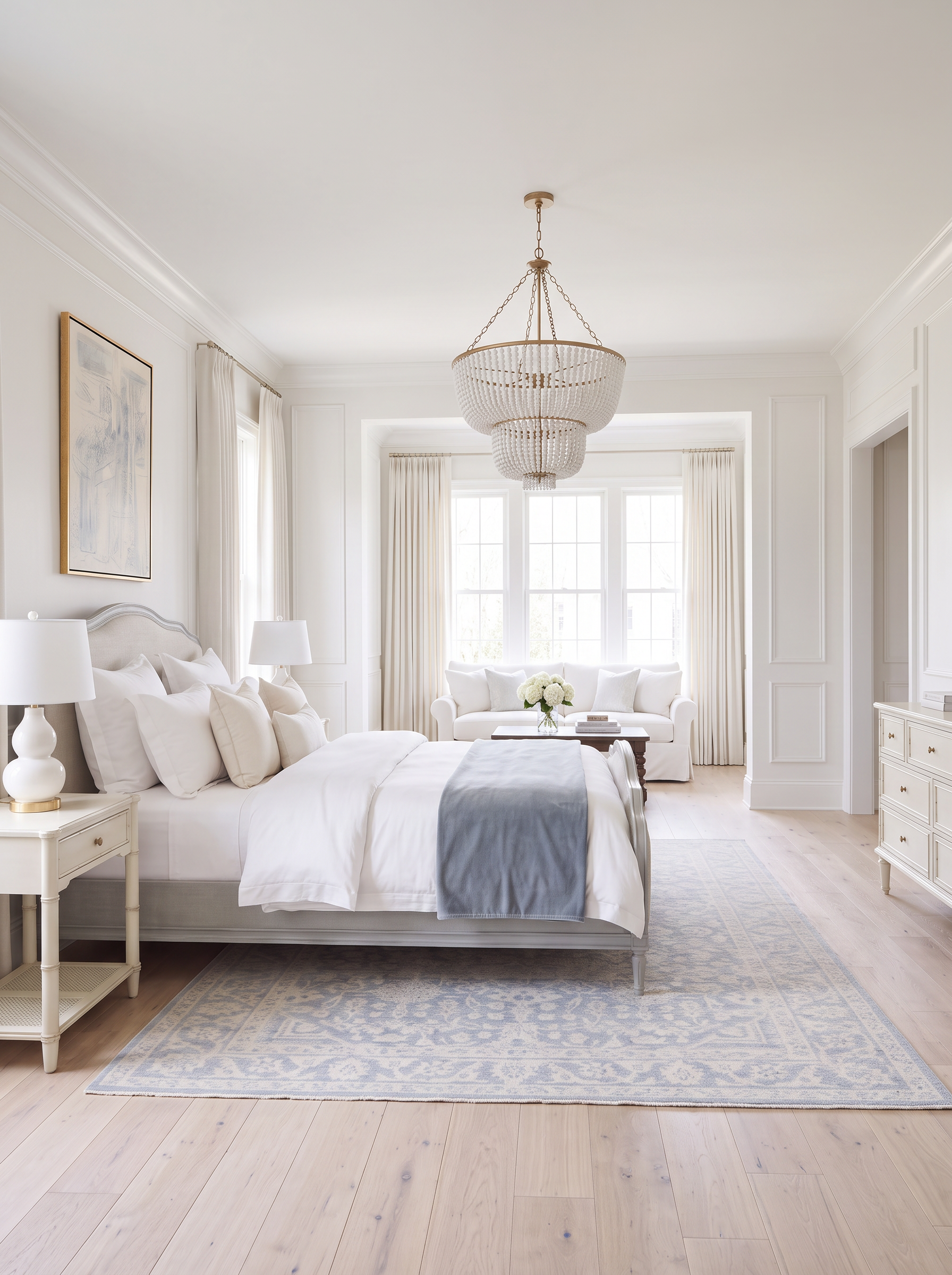
For most rooms, I prefer floor-length drapery that either just grazes the floor or floats slightly above it. It gives you the long vertical line we're trying to create without leaving a pile of fabric collecting dust underneath the window.
A little break at the floor can also be pretty if you prefer a softer look, but I generally don't think you need several inches of fabric puddling on the floor to make curtains look finished.
This is also why I like deciding on rod height before buying curtains whenever possible.
If you buy 84-inch panels first and then discover that they force you to hang the rod directly above the window trim, the curtains have essentially made the design decision for you.
Instead, decide where you want the rod, measure from there to the floor, and then choose your curtain length. Ready-made panels come in several lengths, so moving up to a longer panel can often give you a much more custom-looking result without actually ordering custom drapery.
I especially like pinch-pleat drapery for this look because it gives ready-made panels a much more tailored finish. I’ve linked similar finds here—the Liz Linen Pleated Drapery and Isabella Heavyweight Cotton Pleated Drapery.
Both are the kind of simple, full-length panels I’d use in a living room, bedroom, nursery, or really anywhere I want the windows to feel a little more finished without making the drapery itself the main event.
The curtains can be very simple. Get the height, width, fullness, and length right, and they do exactly what I want them to do: frame the window instead of covering it.

You May Also Like…


Love classic home design?
Get one beautifully designed newsletter each month featuring:
New virtual room designs
Designer styling tips
Curated collections
Exclusive decorating inspiration