AI-generated design concept for inspiration. Linked products are similar, not exact matches. Affiliate links may be used; as an Amazon Associate, I earn from qualifying purchases.
A dining room can feel special without feeling like it’s waiting for Thanksgiving.
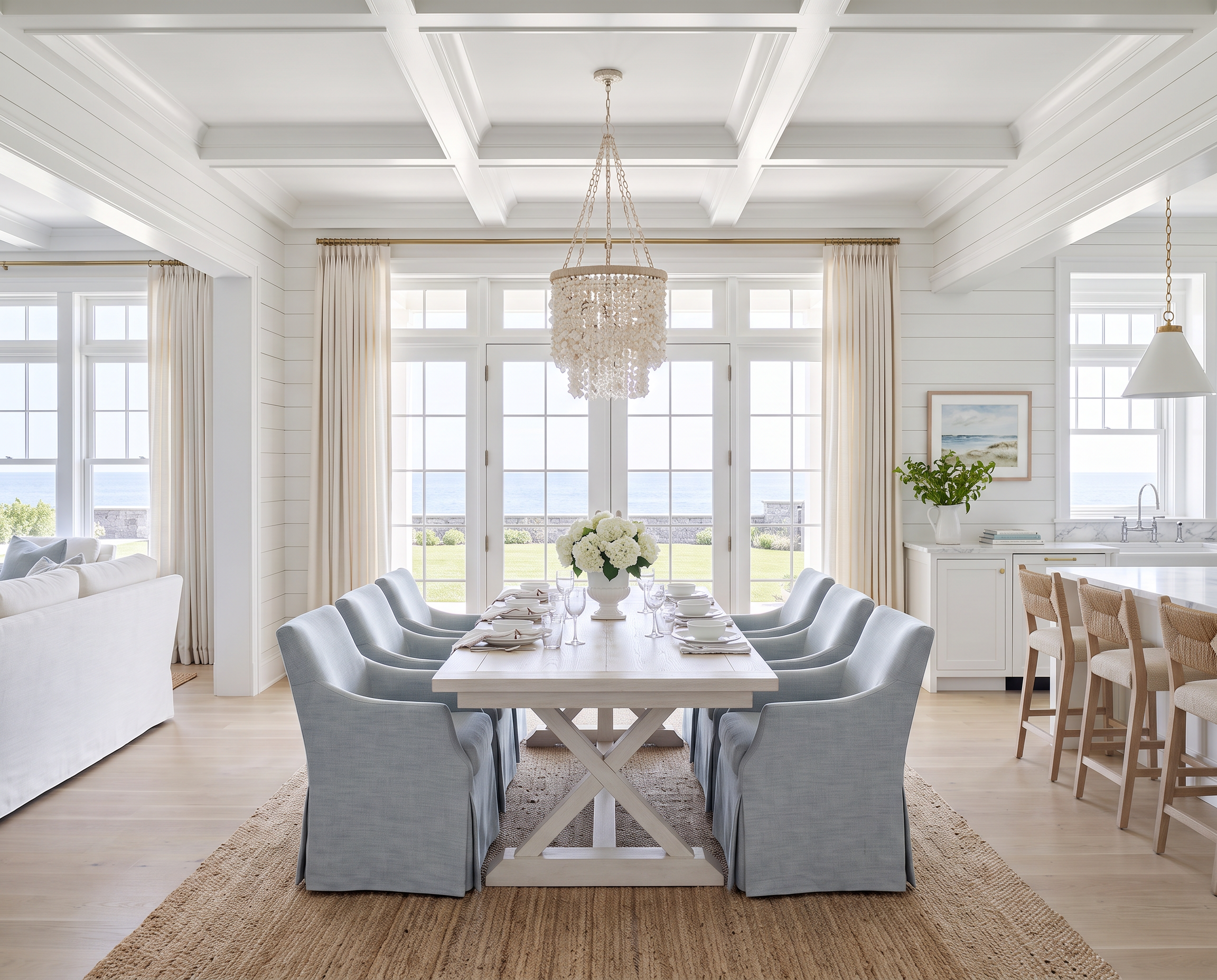
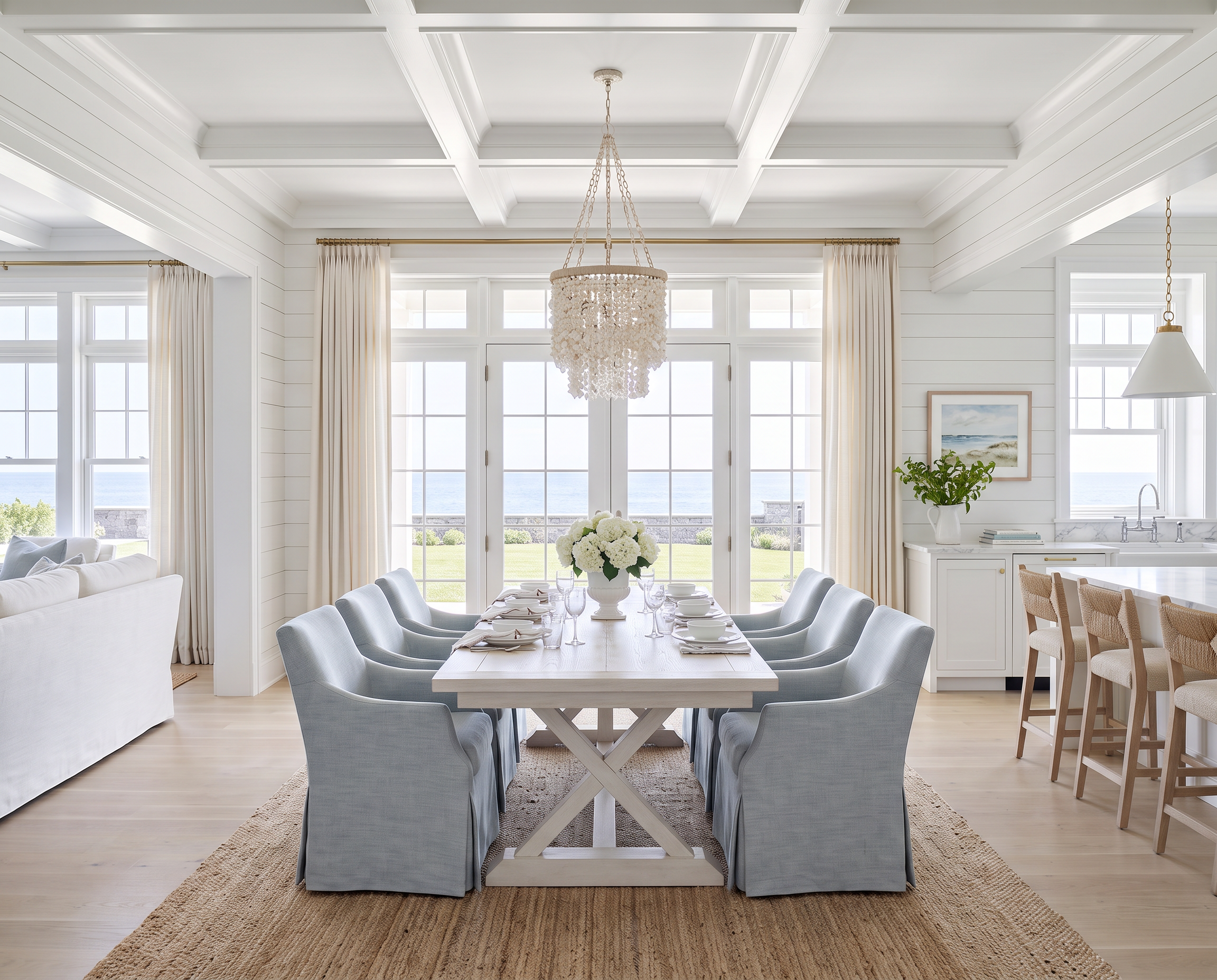
That’s what I like about this one. The shell chandelier gives you that beautiful statement moment overhead, but warm wood, slipcovered chairs, natural texture, and soft drapery keep everything underneath it comfortable enough for everyday life.
It feels dressed up—but you can still eat Tuesday-night dinner here.

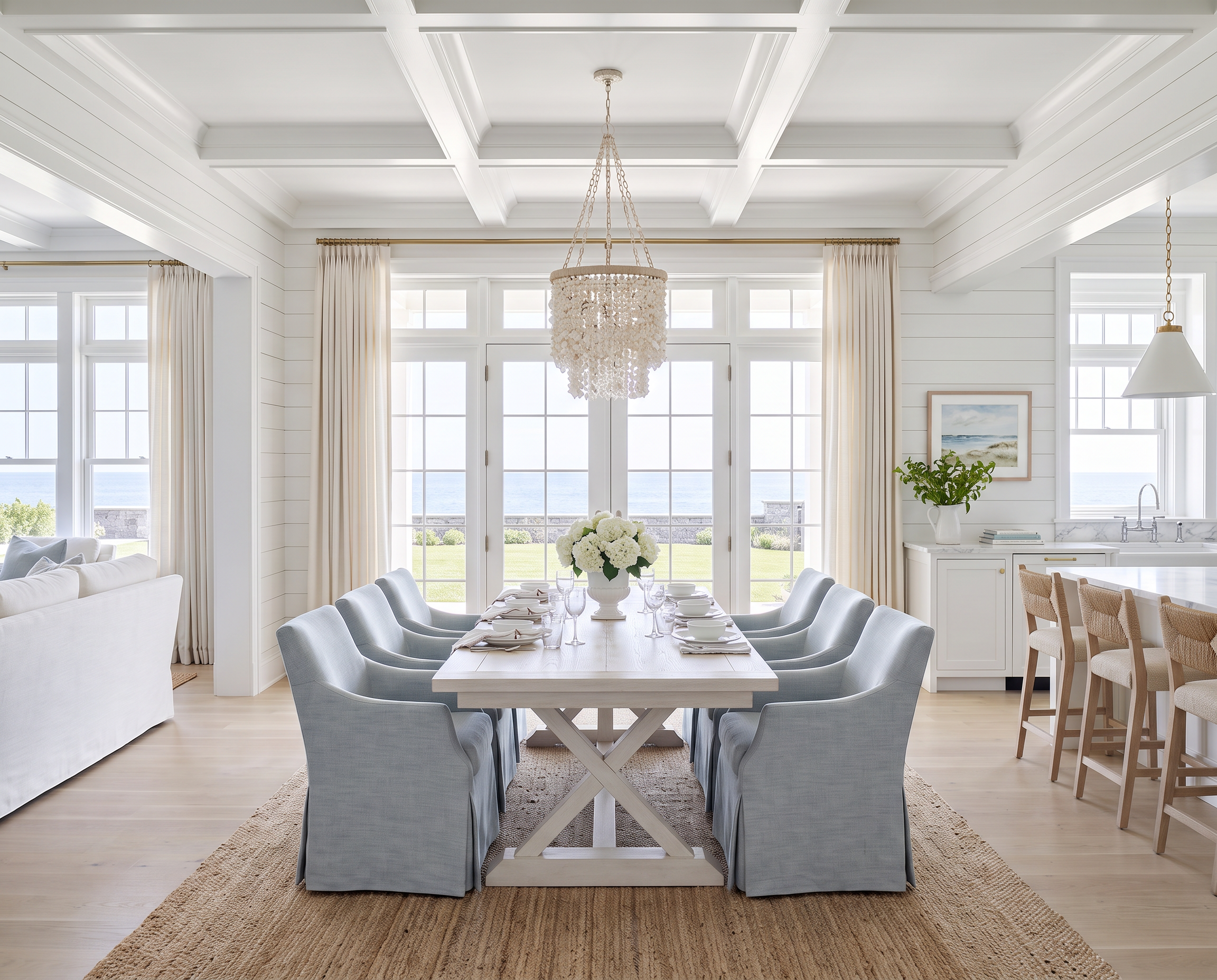
A statement chandelier doesn’t have to make a room feel formal.
The shell chandelier is obviously the first thing you notice, and I think that’s exactly how it should be.
I’ve linked a similar find here—the Linear White Shell Chandelier.
Capiz shell is one of my favorite ways to bring something special into a dining room because it catches the light beautifully without the formality of crystal. You get the sparkle, but the natural texture keeps everything feeling a little more relaxed.
Underneath it, I’d keep the furniture comfortable and fairly simple.
I’ve linked similar finds here:
Removable slipcovers are one of those things that make a lot of sense in a dining room—especially one that actually gets used.
White dining chairs sound considerably less practical until you remember that you can take the covers off and wash them.
The warm, whitewashed table also keeps all of that white from feeling too crisp. I like having some variation in the wood tones rather than trying to make every piece in the room match perfectly.
And if this dining room connects visually to another space, repeating one or two colors between them is enough.
You don't need matching rooms. A little blue or green carried from one space into the next can create that connection without making the whole house feel like it came as a set.
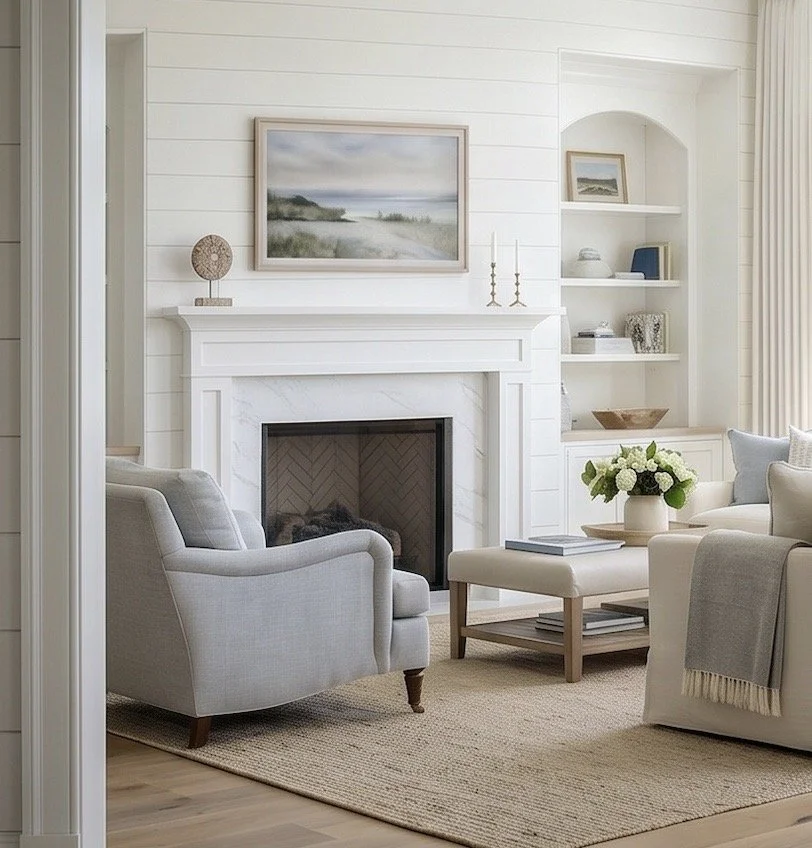
Lighting is one place where a few inches really do matter.
Dining-room lighting has to look good, but it also has a job to do.
Whenever possible, I’d put the chandelier on a dimmer. Bright light is great when the table is covered in homework or you're trying to see what you're eating at breakfast. Dinner is another story.
Being able to lower the light completely changes how the room feels without changing anything else.
For hanging height, I generally like the bottom of a dining chandelier about 30 to 34 inches above the tabletop.
That keeps it low enough to feel connected to the table without hanging directly in everyone's line of sight.
If you have additional lighting elsewhere in the room, it doesn't need to match the chandelier exactly.
I’ve linked a similar find here—the Birch Lane Seyon Pendant.
I'd rather have fixtures that relate to each other through finish, shape, or material than a perfectly matching lighting set. It gives the room a much more collected feel
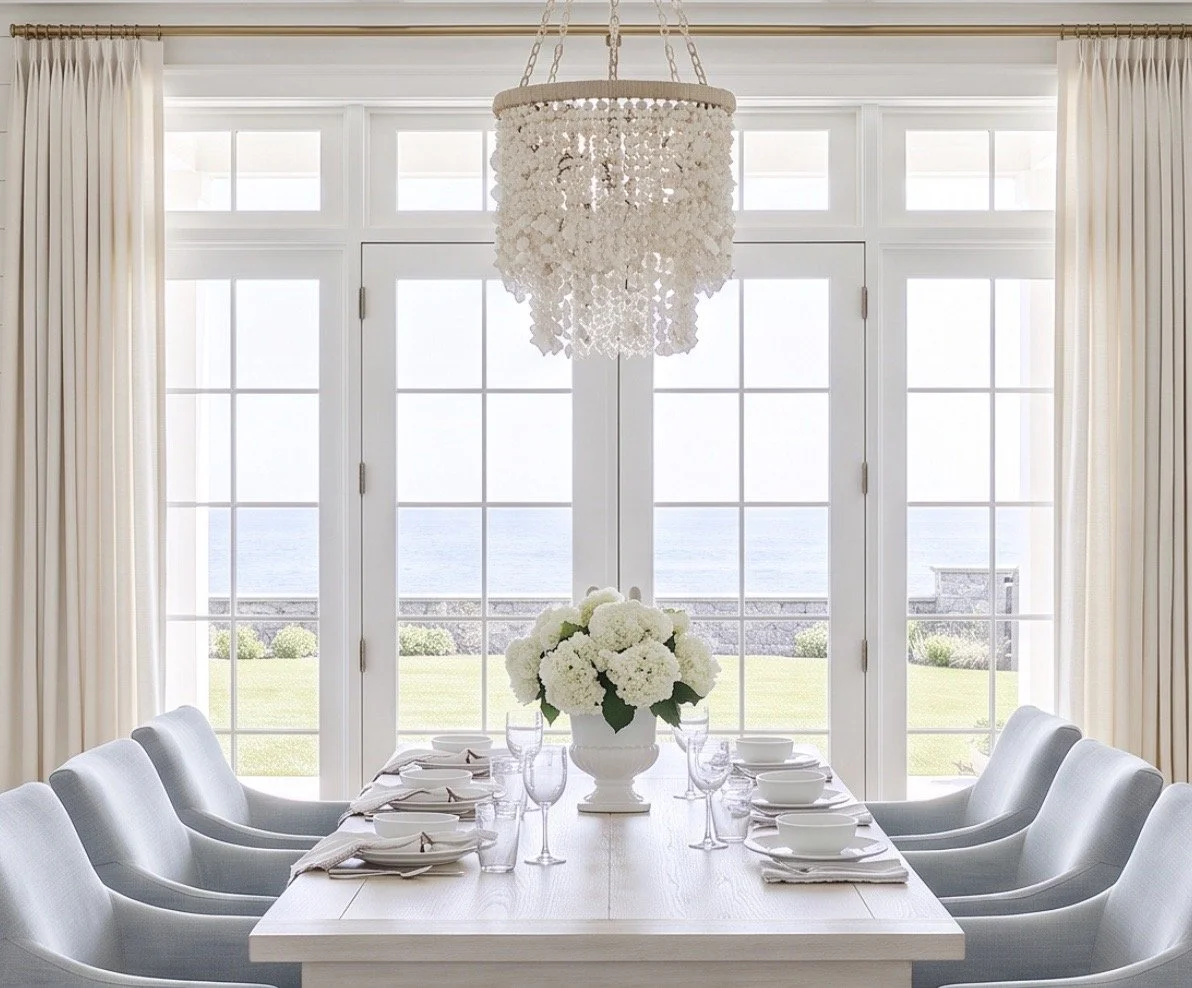
When the lighting makes a statement, everything else can quiet down.
There’s already plenty to look at overhead, so this room really doesn’t need a lot of competing pattern.
I’ve linked a similar find here—this Natural Fiber Rug.
The woven texture adds warmth underneath the table without introducing another strong pattern, and it helps ground all of the lighter furniture.
At the windows, I’ve linked a similar find here—the TWOPAGES Liz Linen Drapery Panels.
These are still my forever go-to draperies for getting that fuller, more custom look at a really good price point. Hang them close to the ceiling and let them fall all the way to the floor. That extra height makes such a difference.
For the table, I’d keep things even simpler.
I’ve linked similar finds here:
And honestly, that may be all you need.
I almost always prefer one substantial vase or arrangement over a collection of smaller things scattered across a dining table. It looks cleaner, gives the centerpiece enough scale to hold its own, and—possibly most importantly—is easy to move.
Because eventually somebody is going to need the table for dinner, homework, a school project, or something involving an unreasonable amount of poster board.
That’s really why this room works for me.
The shell chandelier gets to be the beautiful statement piece, while everything around it—warm oak, washable slipcovers, woven texture, simple drapery, and a few natural accents—keeps the room comfortable enough to actually use.
Love classic home design?
Get one beautifully designed newsletter each month featuring:
New virtual room designs
Designer styling tips
Curated collections
Exclusive decorating inspiration