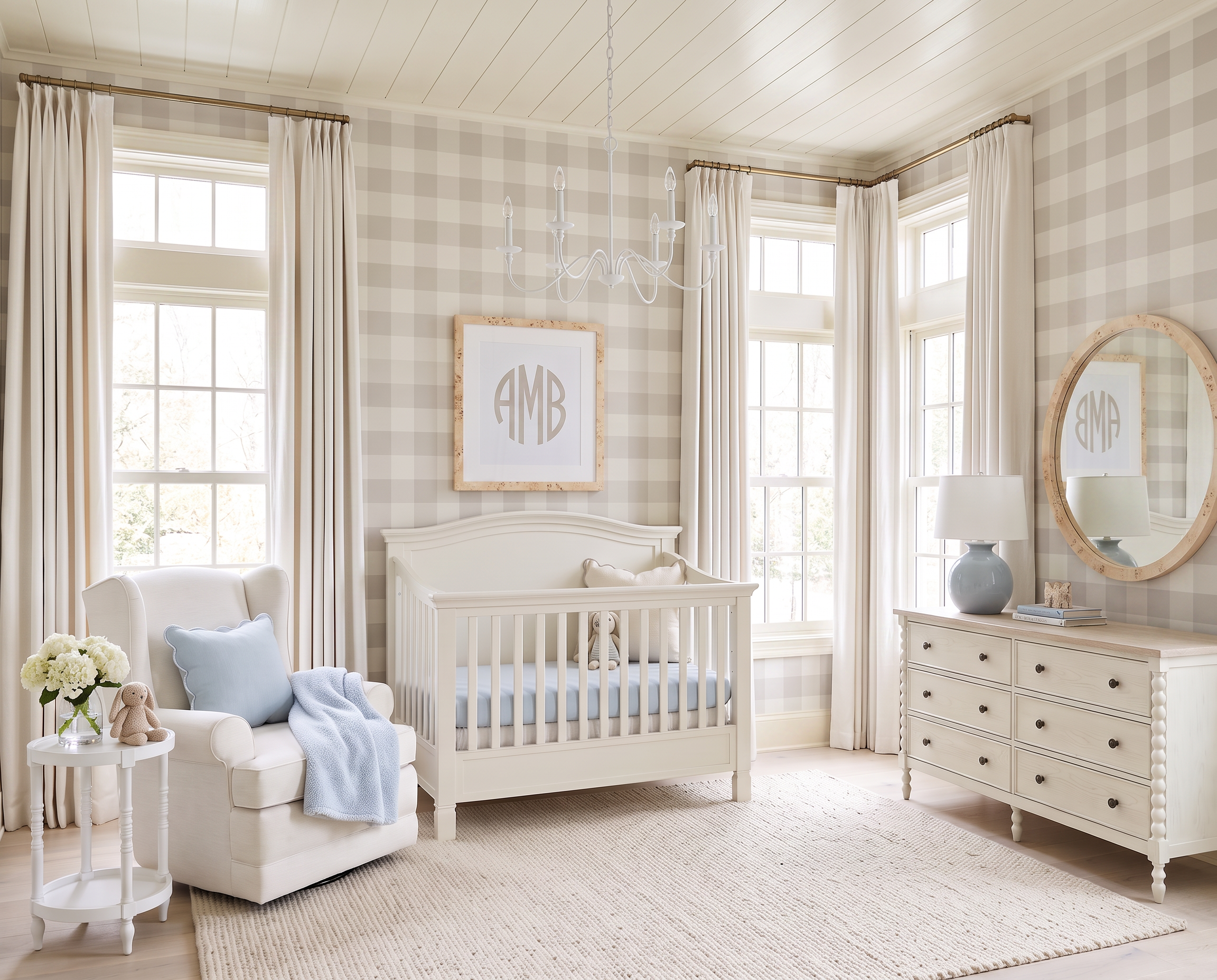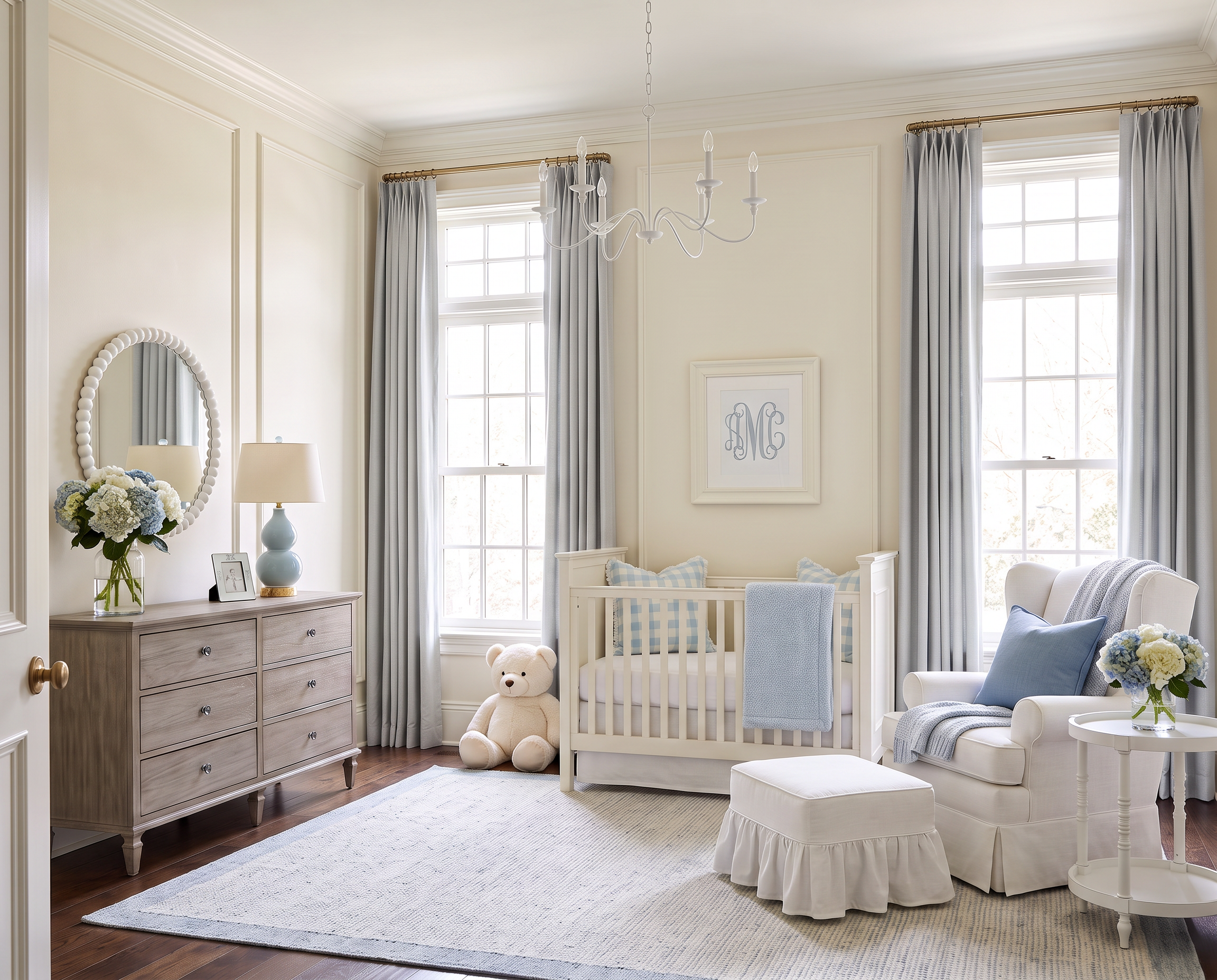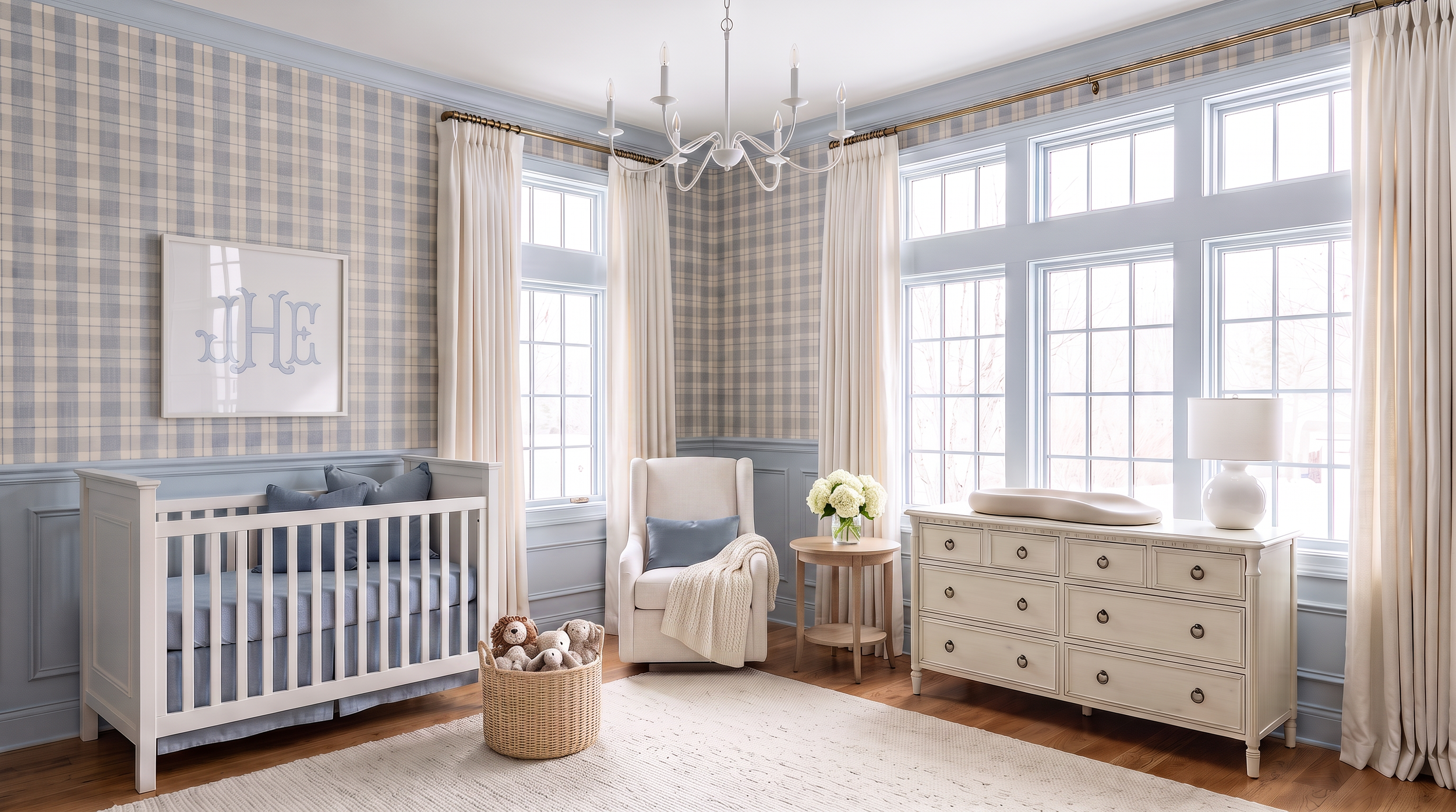
AI-generated design concept for inspiration. Linked products are similar, not exact matches. Affiliate links may be used; as an Amazon Associate, I earn from qualifying purchases.
There’s something about plaid in a nursery that just works.
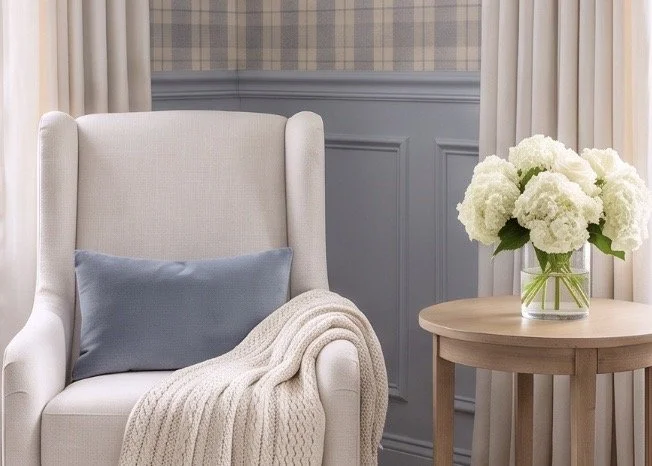
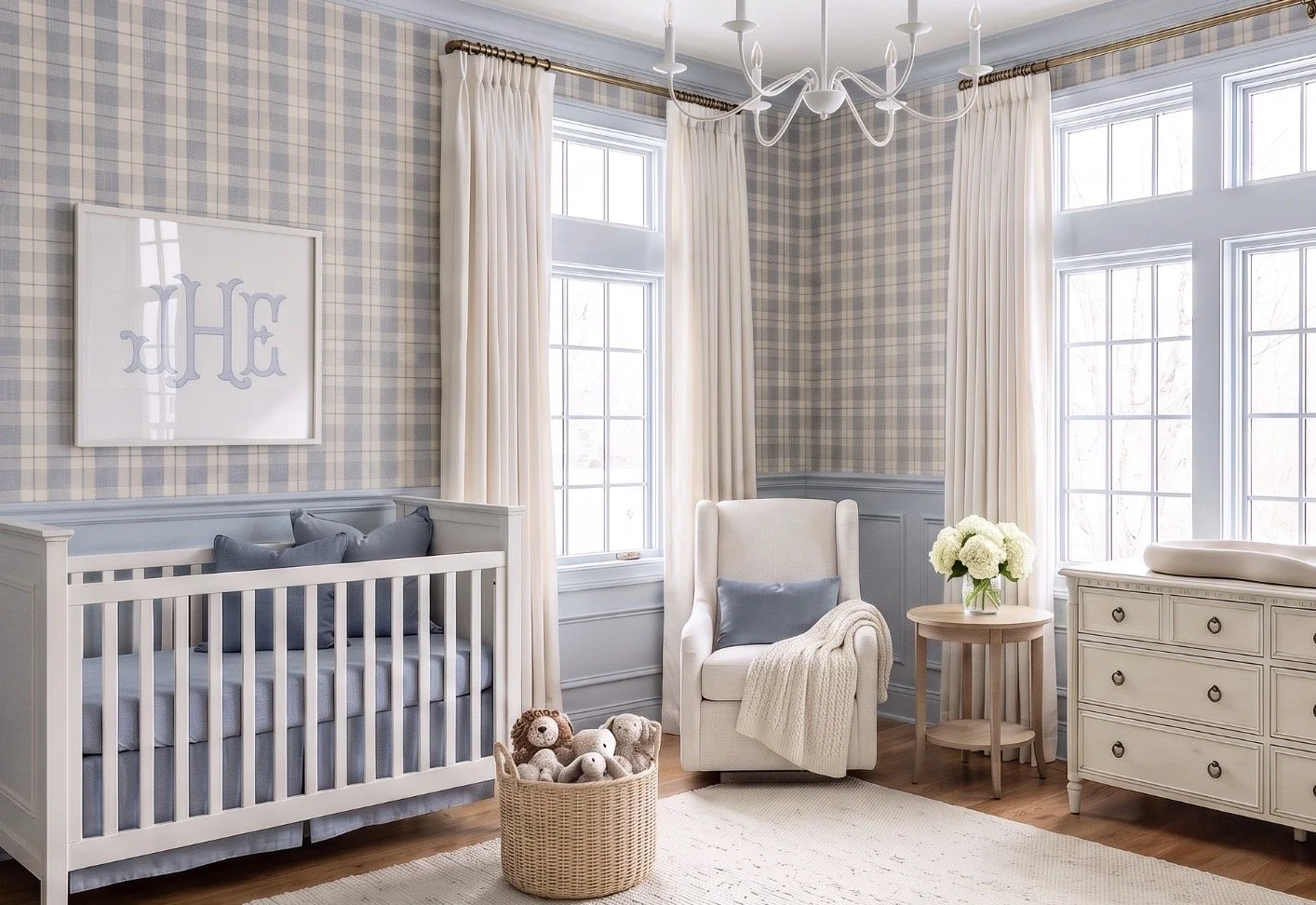
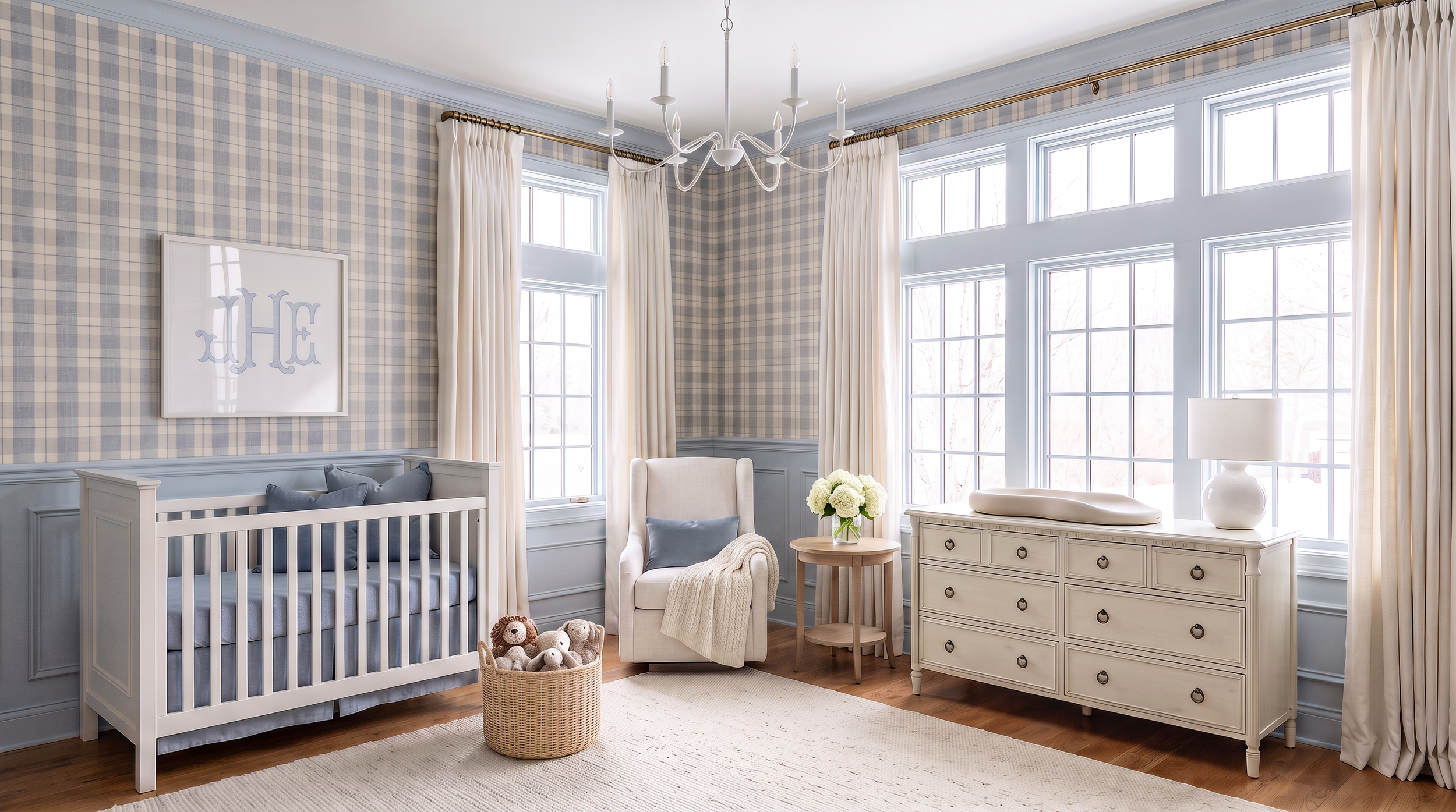
It gives you pattern and personality without making the room feel overly themed—or like you’ll need to redecorate the minute your baby becomes a toddler. Here, soft blue plaid wallpaper sits above painted paneling, with classic white furniture and a few warm, natural layers keeping everything light.
Sweet enough for a nursery, but with plenty of room to grow up.

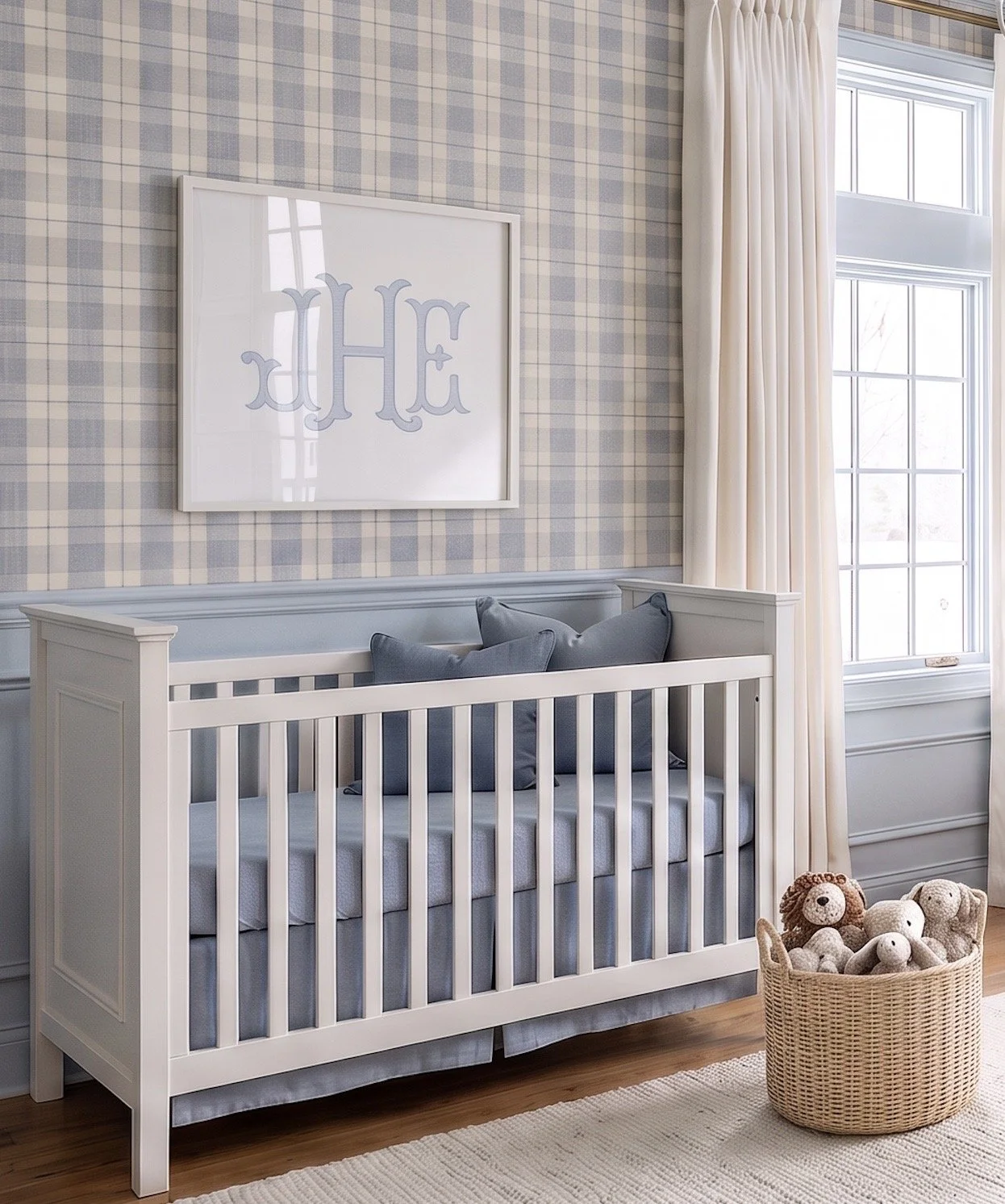
Plaid wallpaper is considerably easier to commit to when you only use half as much of it.
That's one of my favorite things about this room.
Instead of covering every wall from floor to ceiling, the plaid stays above the painted paneling. You still get all of the pattern and personality, but the lower half of the room gives your eye somewhere to rest.
I've linked a similar Gracie Oaks Blue Plaid Wallpaper here.
I especially love plaid in a nursery because it doesn't really belong to a particular age.
It works for a baby. It works for a five-year-old. Honestly, it could work in a guest room or study twenty years from now.
That's a much easier decorating commitment for me than wallpaper covered in something the child may passionately object to by kindergarten.
The furniture stays classic for the same reason.
I've linked similar options for the larger pieces shown here:
White keeps everything bright against the blue walls, and neither piece is trying particularly hard to look like nursery furniture.
That's exactly what I want.
Let the little things tell us there's a baby living here.
Wallpaper gets a lot easier to commit to when you don’t have to put it everywhere.
I love wallpaper, but covering every inch of a nursery in a stronger pattern can be a lot. Using it only above the paneling gives you all the charm without letting it take over the room.
The painted paneling also makes the lower half of the walls feel a little more substantial—and eventually gives you something durable at exactly the height where little hands tend to find the walls.
Plaid is especially good here because it doesn’t belong to any particular age. There are no characters or themes to outgrow. Change the crib to a bed someday, swap a few accessories, and the walls can stay exactly as they are.
I’ve linked a Gracie Oaks Blue Plaid Wallpaper to recreate the same classic look.
I kept the main furniture equally timeless. Nothing needs to make a huge statement because the walls are already doing plenty.
The Fillmore Crib from Pottery Barn Kids has the same classic white look as the crib shown here.
The Evolur Julienne Six-Drawer Dresser gives you plenty of storage while keeping that softer, more timeless feel.
And I’ll almost always choose a real dresser over a dedicated changing table. Put a secure changing topper on it now, remove it later, and you still have a perfectly useful piece of furniture instead of something whose career ended at age two.
A nursery can feel like it belongs to a baby without making “baby” the entire decorating theme.
This is where I think the smaller details get to have a little more fun.
A favorite stuffed animal, a soft crib skirt, or a pretty basket can make the room feel sweet and personal right now. The nice thing is that none of those choices requires repainting or stripping wallpaper when your child gets older.
I’ve linked a few pieces that bring in those softer nursery layers:
A pleated blue crib skirt brings another touch of blue down to the furniture.
The Goodpick Cotton Rope Basket gives you an easy place for blankets, toys, and the approximately 900 small things babies somehow acquire.
The chair, however, is one place where I care much less about being cute and much more about being comfortable.
I’ve linked the Pottery Barn Merced Glider for the same soft upholstered look. And if you have room for a reclining glider, I’d choose it. You’re going to spend a lot of time in that chair, including hours when you would very much rather be asleep.
Comfort wins.
The last few layers are what take a nursery from furnished to finished.
Lighting makes a particularly big difference in a nursery because you really need both kinds: something pretty overhead and something much softer for nighttime.
I’ve linked:
A whimsical white chandelier for the same light, delicate look overhead
The McCoy Ceramic Lamp from Pottery Barn for softer light on the dresser
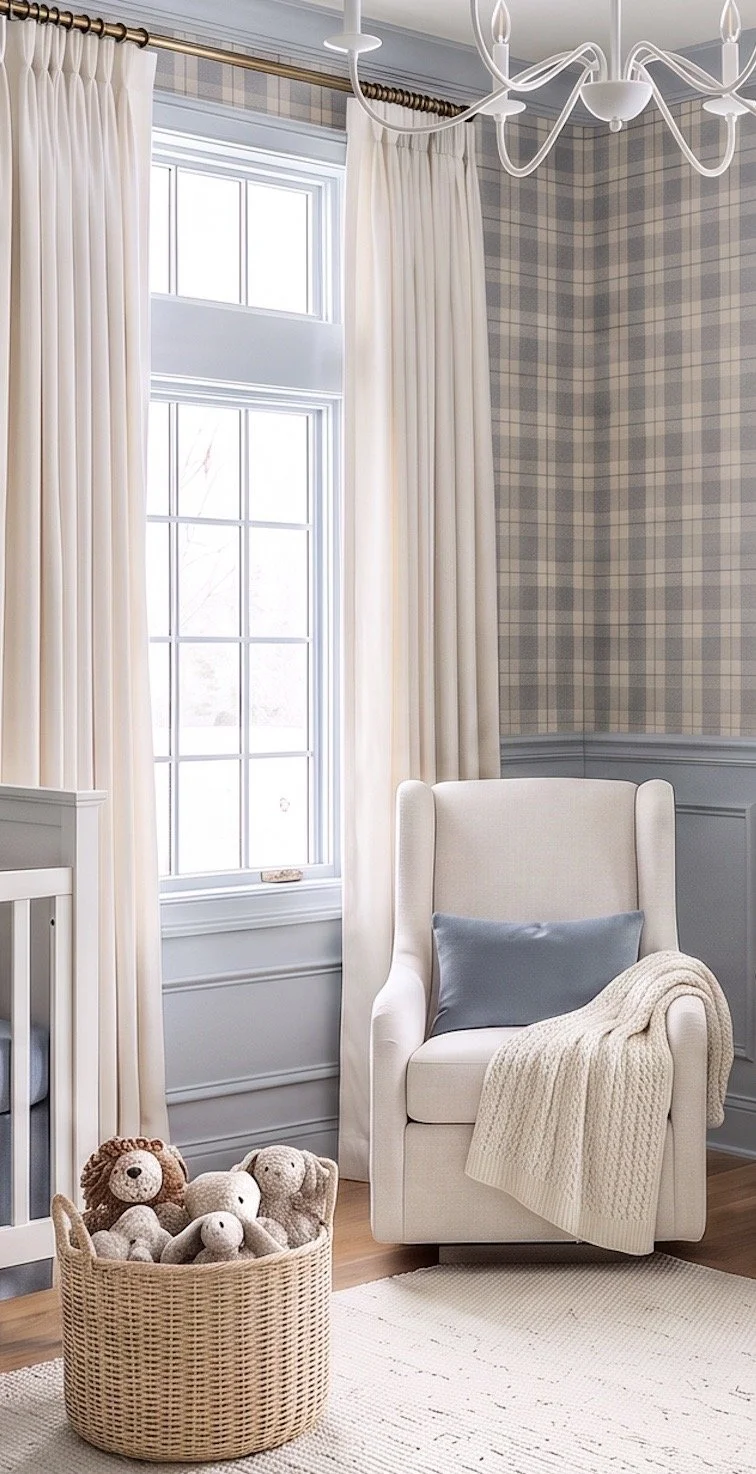
Then I’d finish the room with full-length drapery and a large neutral rug. Both soften all of the harder lines from the crib, dresser, windows, and paneling without introducing another competing pattern.
TWOPAGES Liz Linen-Look Curtain Panels give the windows that full, tailored look.
A natural-look rug adds warmth and gives the furniture a soft foundation.
Hang the curtains high and let them come all the way to the floor. It’s one of those little decisions that makes the entire room feel taller and more finished—and there is absolutely no reason nursery curtains need to stop awkwardly at the bottom of the window.
What I like most about this room is how little actually needs to change as a child gets older. The crib can become a bed, the baby accessories can disappear, and even the glider can eventually move somewhere else.
The plaid and paneling can simply stay put.
Love classic home design?
Get one beautifully designed newsletter each month featuring:
New virtual room designs
Designer styling tips
Curated collections
Exclusive decorating inspiration